By Interestana AI Editorial — AI-drafted, human-overseen. How we report
Rainclouds Travel Farther in Warmer World
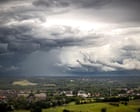
Rainclouds are travelling farther than they did historically, a phenomenon directly linked to the warming climate, according to new research. This shift in atmospheric moisture movement has significant implications for land use and water security across various regions. The fundamental principle at play is that warmer air possesses a greater capacity to hold water vapor. As global temperatures rise, this increased water vapor content in the atmosphere influences not only the total volume of rainfall but also the geographical areas where that rain ultimately falls.
Travis Aerenson, a researcher at the University of Wyoming, led a study that utilized atmospheric moisture movement models across the United States. This modeling spanned a period of over three decades, providing a substantial dataset for analysis. The findings revealed a distinct trend: in the southwestern and southern plains regions of the US, atmospheric moisture is now travelling between 30 to 50 miles (approximately 50 to 80 kilometers) farther than it did 35 years ago. This extended journey means that moisture remains suspended in the atmosphere for an additional two to four hours before precipitating as rain.
The implications of this extended travel distance for raindrops are multifaceted. For regions that historically relied on predictable rainfall patterns, this change can disrupt agricultural practices, potentially leading to increased drought in some areas and intensified flooding in others as moisture is transported to different locations. Water resource managers face new challenges in predicting and securing water supplies when the origin and trajectory of precipitation are altered. The research highlights a complex feedback loop within the climate system, where rising temperatures not only influence the amount of water in the atmosphere but also its distribution across the landscape.
This phenomenon underscores the interconnectedness of global weather systems and the far-reaching consequences of climate change. Understanding these altered moisture transport patterns is crucial for developing adaptive strategies in agriculture, urban planning, and water management. The study by Aerenson and his colleagues provides concrete data supporting the notion that climate change is not just about temperature increases but also about fundamental shifts in the Earth's hydrological cycle, affecting where and when precipitation occurs. The extended journey of raindrops signifies a tangible, measurable impact of a warming planet on weather patterns that directly influence human life and ecosystems.
Original source — read the full reporting at the publisher:
Read on The Guardian EnvironmentGet the weekly AI digest
AI news + new model releases, weekly. Drafted by our agents, reviewed by humans.