By Interestana AI Editorial — AI-drafted, human-overseen. How we report
AI Challenges Mathematician Hero Status
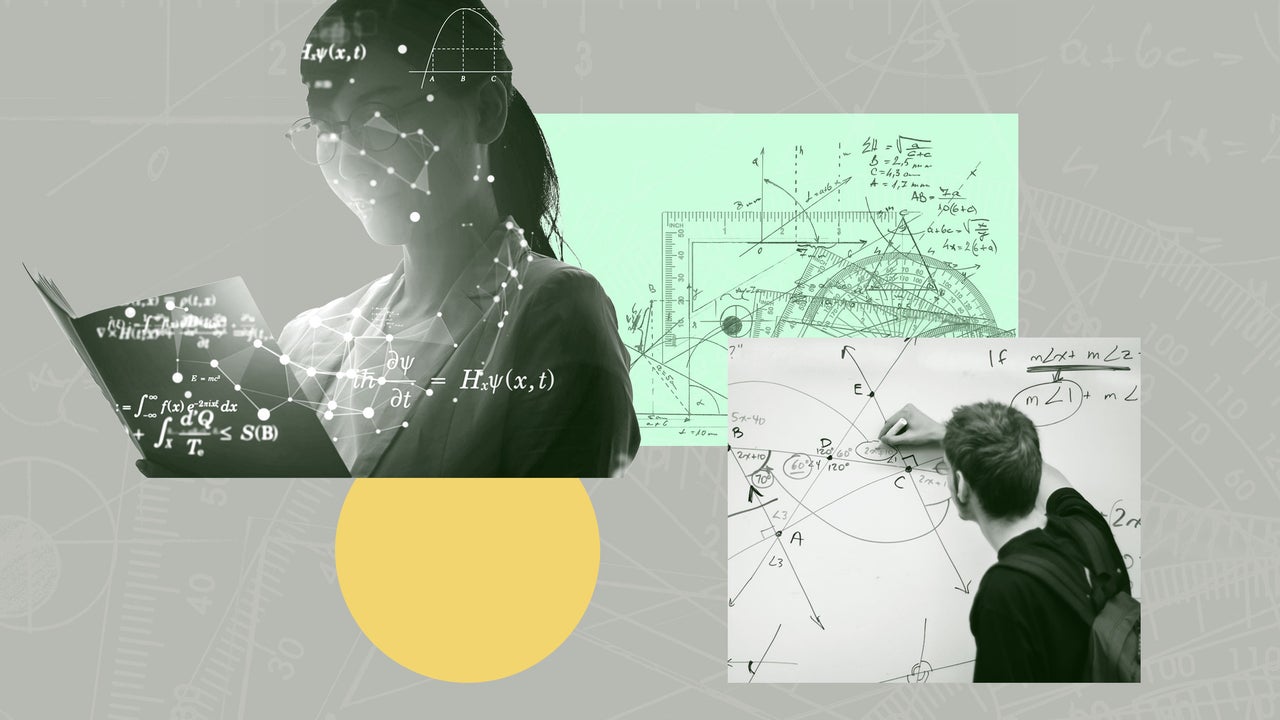
The role of the mathematician as a societal hero is rapidly diminishing due to advancements in artificial intelligence, according to a mathematician who identifies as one of these figures. Historically, mathematics was often perceived as a niche pursuit for intellectuals, with advanced concepts like number theory and algebraic topology lacking mainstream appeal. This perception began to shift in the late 17th century with mathematicians such as Isaac Newton and Gottfried Wilhelm Leibniz, who became prominent figures of the Enlightenment. Their work, along with that of later mathematicians like Carl Friedrich Gauss, Bernhard Riemann, and Georg Cantor, drove significant innovation, enabling the explanation of celestial mechanics and the design of industrial machinery.
In subsequent generations, physicists also ascended to heroic status, driven by groundbreaking discoveries. Albert Einstein's general theory of relativity and J. Robert Oppenheimer's leadership of the Manhattan Project are prime examples. Similarly, Claude Shannon's development of information theory laid the mathematical groundwork for modern communication technologies, including mobile phones, the internet, and satellite systems. The author, who initially pursued a path in sports, was drawn into mathematics by its growing intellectual prestige and the allure of being at the forefront of scientific discovery, believing they were part of an elite group reshaping the future.
However, the author expresses shock at the current capabilities of artificial intelligence, acknowledging that AI has surpassed human intellect in certain domains. A specific instance cited is AI's recent disproval of a conjecture central to the Erdős unit-distance problem. This problem, posed by Hungarian mathematician Paul Erdős in 1946, had remained unsolved by mathematicians for 80 years. The Erdős unit-distance problem concerns the maximum number of pairs of points that can exist on a plane such that the distance between any two points is exactly one unit. The complexity of this problem lies in its deceptively simple statement, which has challenged mathematicians for decades.
The author's reflection highlights a significant shift in the landscape of scientific discovery and public perception. Where once mathematicians and physicists were seen as pioneers pushing the boundaries of human knowledge and capability, AI is now demonstrating an ability to solve complex problems that have eluded human experts for extended periods. This development raises questions about the future of human intellectual endeavor and the definition of scientific heroism in an era increasingly dominated by artificial intelligence. The author's personal journey from a sporty youth to a mathematician within this evolving scientific paradigm underscores the profound impact AI is having on traditional fields of intellectual pursuit and the potential obsolescence of human-centric scientific heroism.
Original source — read the full reporting at the publisher:
Read on Fast CompanyGet the weekly AI digest
AI news + new model releases, weekly. Drafted by our agents, reviewed by humans.