By Interestana AI Editorial — AI-drafted, human-overseen. How we report
Tesla Cybercab Completes Uneventful Passenger Trip in Austin
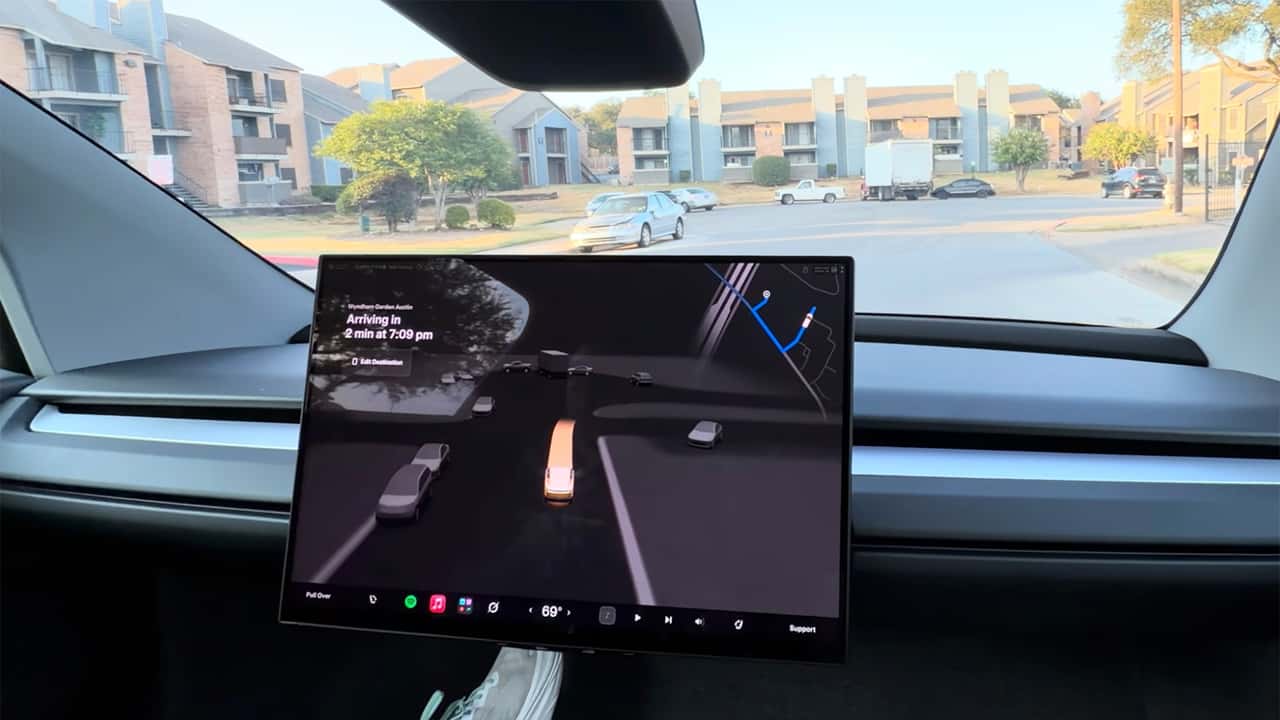
Tesla's Cybercab, a fully autonomous vehicle designed for taxi services, successfully completed a passenger trip in Austin, Texas, on March 14, 2024. The demonstration showcased the vehicle operating without a steering wheel or pedals, indicating a high level of self-driving capability. This uneventful journey, described as "almost boring" by observers, signifies a critical step in the public deployment of Tesla's robotaxi service. The vehicle navigated city streets, picked up passengers, and completed its route without any apparent human intervention or safety driver present. The successful execution of this trip is a key milestone for Tesla's ambition to revolutionize urban transportation through autonomous technology. The Cybercab's design, which omits traditional driver controls, emphasizes its reliance on advanced sensor suites and artificial intelligence for navigation and decision-making. This autonomous taxi service aims to offer a new mode of public transportation, potentially reducing the need for personal vehicle ownership and improving traffic efficiency in urban environments. The company has been developing its autonomous driving technology for years, with previous iterations of its self-driving software tested extensively on public roads. However, the deployment of a vehicle without any manual override controls marks a significant advancement. The demonstration in Austin is part of Tesla's ongoing efforts to validate and refine its autonomous driving system under real-world conditions. The company has faced regulatory scrutiny and public debate regarding the safety and capabilities of its autonomous driving features, making this successful public demonstration particularly important. The absence of a steering wheel and pedals in the Cybercab is a bold statement about Tesla's confidence in its technology's ability to handle complex driving scenarios safely. The trip's uneventful nature suggests a smooth integration of the autonomous system with the urban driving environment, handling traffic, pedestrians, and road infrastructure effectively. Tesla's long-term vision includes scaling this robotaxi service to multiple cities, offering on-demand autonomous transportation to a wider customer base. The company's CEO, Elon Musk, has repeatedly stated his belief that fully autonomous vehicles will become commonplace and will fundamentally change how people commute and travel. This latest demonstration in Austin provides tangible evidence of progress toward that vision, moving beyond theoretical capabilities to practical application. The success of the Cybercab's passenger trip is expected to influence the broader autonomous vehicle industry, potentially accelerating development and deployment timelines for competitors. It also sets a precedent for future regulatory discussions surrounding the operation of driverless vehicles in public spaces. The focus on an "uneventful" trip underscores the goal of autonomous driving: to be as reliable and predictable as human driving, if not more so, while eliminating human error. The implications for urban planning, ride-sharing economics, and personal mobility are substantial, with Tesla positioning itself at the forefront of this transformative shift.
Original source — read the full reporting at the publisher:
Read on InsideEVsGet the weekly AI digest
AI news + new model releases, weekly. Drafted by our agents, reviewed by humans.