By Interestana AI Editorial — AI-drafted, human-overseen. How we report
Giant Iceberg Capsizes Near Greenland Coast
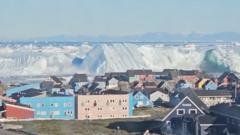
A colossal iceberg dramatically capsized and overturned near the coast of Greenland, an event captured on video by a bystander. The incident, which occurred recently, showcased the immense power of natural forces as the ice mass shifted, leading to its complete inversion. The visual evidence from the footage clearly depicts the iceberg rolling over, a phenomenon that can be triggered by various factors including melting and wave action. The overturning of such a large ice formation is not only a visually striking event but also a significant geological occurrence with potential localized impacts.
When icebergs melt unevenly, their center of gravity can shift. The submerged portion of an iceberg is typically much larger than the visible portion, often accounting for up to 90% of its total mass. As warmer waters or air temperatures cause the submerged part to melt or erode more rapidly than the exposed part, the iceberg can become unstable. This instability can lead to a complete rollover, where the submerged portion rises above the water and the previously exposed section sinks. Such events can generate substantial waves, posing a risk to any vessels in the vicinity. The specific location near Greenland's coast places this event within a region known for its dynamic ice sheet and iceberg activity, a critical area for climate change research.
The video footage, shared by a passerby, provides a rare and direct observation of this powerful natural process. While the exact size and dimensions of the iceberg were not specified in the initial reports, the visual scale suggests it was a substantial piece of glacial ice. The resulting wave generated by the overturning is also a key feature of the captured video, highlighting the displacement of water caused by the massive ice block's sudden shift. Icebergs in this region originate from the Greenland ice sheet, one of the largest ice masses on Earth. Their calving and subsequent journey through the North Atlantic are closely monitored by scientists studying sea-level rise and ocean currents. The overturning of icebergs is a known, albeit less frequently observed, aspect of their lifecycle. It underscores the complex and often unpredictable nature of glacial ice as it interacts with the marine environment. The event serves as a stark reminder of the ongoing changes occurring in Earth's polar regions.
Original source — read the full reporting at the publisher:
Read on BBC World NewsGet the weekly AI digest
AI news + new model releases, weekly. Drafted by our agents, reviewed by humans.