By Interestana AI Editorial — AI-drafted, human-overseen. How we report
Warsh Argues Pausing Rates Tightened Economy More Than Lifting
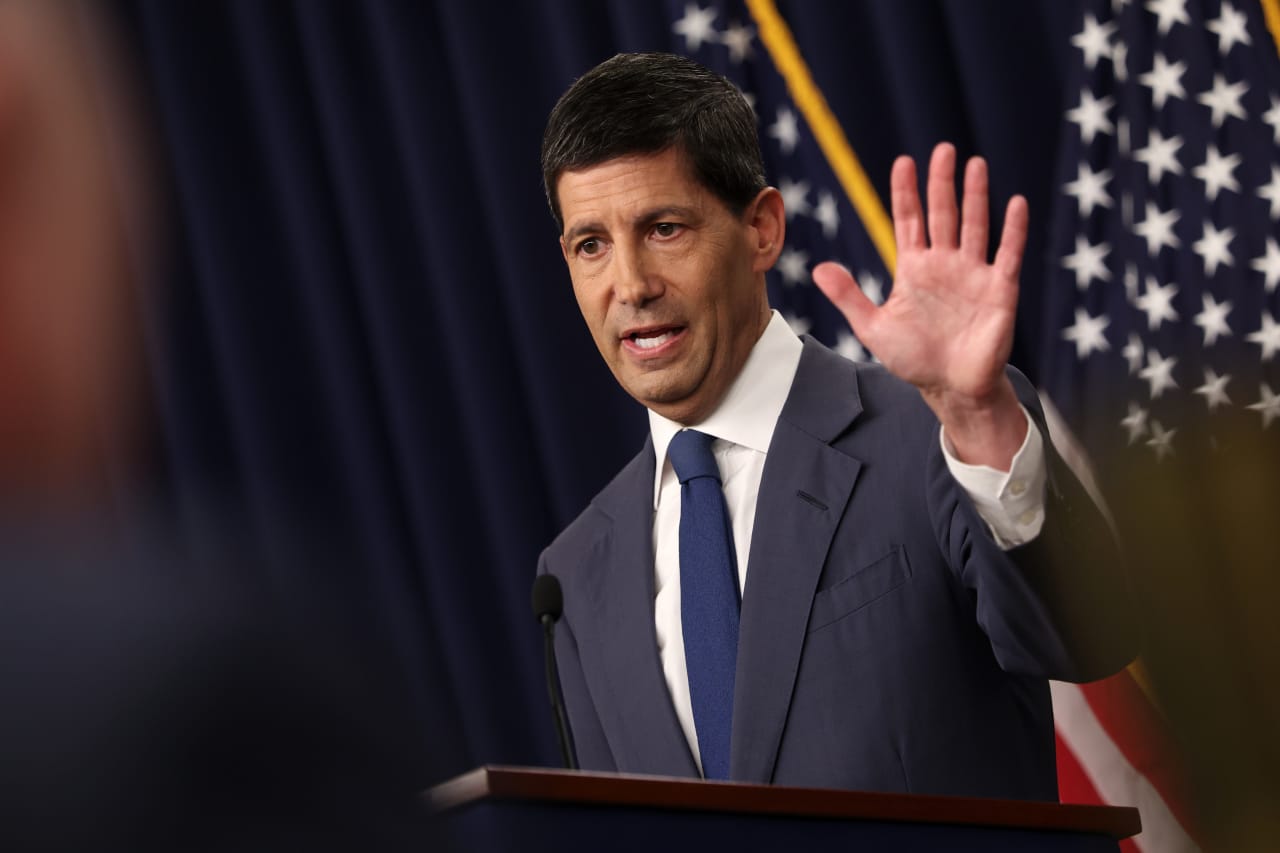
Former Federal Reserve Governor Kevin Warsh has argued that the U.S. central bank's decision to pause interest rate hikes in 2019 effectively tightened monetary policy more than further increases would have. This perspective, detailed in a bond market analysis, suggests that the Fed's inaction created a perception of economic weakness, leading to market behaviors that mirrored tighter financial conditions. Warsh's argument centers on the mathematical implications of the Fed's communication and actions during that period. He posits that by signaling a halt to rate increases, the Federal Reserve inadvertently conveyed a dovish stance that encouraged risk-taking and suppressed longer-term yields, a phenomenon that can be mathematically modeled. This approach contrasts with the traditional understanding of monetary policy, where rate hikes are the primary tool for tightening. Warsh's analysis implies that the market's interpretation of the Fed's pause led to a situation where borrowing costs, while not explicitly raised, became effectively higher due to increased risk premiums and reduced liquidity appetite. The Federal Reserve, under Chair Jerome Powell at the time, had raised rates multiple times in the preceding years, but by late 2018 and into 2019, it shifted to a more accommodative stance, ultimately pausing its tightening cycle. Warsh's contention is that this pause, rather than signaling relief, was interpreted by markets as a sign of underlying economic fragility, prompting a recalibration of asset prices and investment strategies that resulted in tighter financial conditions. This economic theory suggests that forward guidance and the perceived future path of interest rates can have as significant an impact on economic activity as the current level of rates. The bond market, in particular, is highly sensitive to these signals, and Warsh's argument highlights how market participants' expectations can amplify or counteract the intended effects of monetary policy. His mathematical reasoning likely involves analyzing yield curves, inflation expectations, and risk premia to demonstrate how a pause could lead to a tightening effect. This viewpoint challenges conventional economic thinking and offers a nuanced understanding of how central bank actions, or inactions, can influence the broader economy. The period in question, 2019, saw global economic uncertainties, including trade tensions and slowing growth in key regions, which the Federal Reserve was attempting to navigate. Warsh's analysis suggests that the Fed's response, while intended to support the economy, may have had the opposite effect by creating a climate of uncertainty that tightened financial conditions through market mechanisms rather than direct policy rate adjustments.
Original source — read the full reporting at the publisher:
Read on MarketWatchGet the weekly AI digest
AI news + new model releases, weekly. Drafted by our agents, reviewed by humans.