By Interestana AI Editorial — AI-drafted, human-overseen. How we report
Buffett's Tax Journey: $7 at 14 to $27 Billion
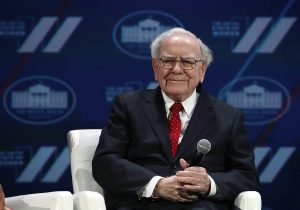
Warren Buffett, a prominent investor and philanthropist, filed his first federal tax return in 1944 at the age of 14, owing $7 on earnings of $592.50 from delivering newspapers in Washington, D.C. This initial tax obligation, documented on a two-page filing shared in 2017, represented a small fraction of his current financial scale. The $592.50 earned in 1944 would be equivalent to approximately $11,406.65 in today's currency, with a corresponding tax liability of about $134.76 based on CPI inflation data. This starkly contrasts with the $26.8 billion Berkshire Hathaway, the conglomerate he leads, paid in U.S. federal taxes in 2024, a figure that was the highest single tax payment to the U.S. government at the time of its announcement. Buffett, who was born on August 30, 1930, in Omaha, Nebraska, developed an early interest in business and markets, influenced by his father, Howard Buffett, a stockbroker and later a four-term U.S. Congressman. The family's relocation to Washington, D.C., during his father's congressional tenure provided the opportunity for young Warren to begin his entrepreneurial endeavors as a newspaper delivery boy. He delivered both morning and afternoon editions for the Washington Post and the now-defunct Washington Times-Herald, serving a route that passed the residences of several U.S. senators. Buffett's perspective on taxation has consistently favored higher contributions from the wealthy. He has publicly stated that he does not believe he pays enough in taxes. Reflecting on Berkshire Hathaway's history before his leadership, which began in 1965, Buffett noted that the company "did not pay a dime of income tax," an observation he deemed "an embarrassment." He further elaborated in his annual shareholder letter that while such "economic behavior may be understandable for glamorous startups," it signals a concern when observed in "a venerable pillar of American industry." This stance underscores his long-held belief in the responsibility of successful entities and individuals to contribute significantly to public revenue, a principle he has advocated for throughout his career, even as his personal wealth grew to an estimated $142 billion, having once been recognized as the world's richest man.
Original source — read the full reporting at the publisher:
Read on FortuneGet the weekly AI digest
AI news + new model releases, weekly. Drafted by our agents, reviewed by humans.