By Interestana AI Editorial — AI-drafted, human-overseen. How we report
‘Walking sausage’: the giant stick insect that proves it’s not over till we give up
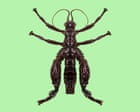
The Lord Howe Island stick insect, scientifically designated *Dryococelus australis* and colloquially known as the tree lobster due to its substantial size, faced a devastating population collapse after the introduction of black rats to its endemic habitat, Lord Howe Island. This unique invertebrate, which evolved over millennia to achieve considerable proportions in the absence of natural predators, was once so plentiful that early European settlers on the island, located in the Tasman Sea between Australia and New Zealand, even utilized them as a readily available source of fishing bait. However, the delicate ecological equilibrium of Lord Howe Island was catastrophically disrupted in 1918. A maritime incident, specifically a shipwreck, inadvertently introduced black rats to the island's shores. These invasive rodents proved to be an immediate and overwhelming threat to the flightless stick insects, leading to the complete eradication of the entire population on the island within an astonishingly short period of just two years. Following this event, the species was widely presumed to be extinct, a tragic testament to the fragility of island ecosystems.
This dramatic ecological collapse serves as a potent illustration of the extreme vulnerability of island endemic species when confronted with introduced predators. Lord Howe Island, a remote oceanic island, had provided a singular evolutionary crucible for *Dryococelus australis*. Its significant size, a common evolutionary adaptation observed in isolated island environments where large predatory mammals are historically absent, rendered it exceptionally susceptible to the newly arrived rat population. The swift extinction of the Lord Howe Island stick insect stands as a critical case study within the field of conservation biology, starkly demonstrating how the introduction of a single invasive species can decimate a population that has evolved in isolation for centuries, undisturbed by such threats.
Despite the prevailing belief in its extinction after the calamitous events of 1918, a small, tenacious population of the Lord Howe Island stick insect was miraculously rediscovered in 2001. This rediscovery occurred on Ball's Pyramid, a remote and imposing sea stack located near Lord Howe Island. The existence of this surviving population offered a crucial glimmer of hope for the species' long-term survival and catalyzed the initiation of intensive conservation efforts. These dedicated initiatives have primarily focused on establishing robust captive breeding programs and have set the ultimate objective of reintroducing the species back into a carefully managed, predator-free environment. The extraordinary narrative of the 'walking sausage,' as it is affectionately nicknamed, powerfully underscores the paramount importance of stringent biosecurity measures to prevent the introduction of invasive species, and conversely, highlights the remarkable resilience of life when afforded an opportunity to recover, even in the face of near-total annihilation.
Original source — read the full reporting at the publisher:
Read on The Guardian EnvironmentGet the weekly AI digest
AI news + new model releases, weekly. Drafted by our agents, reviewed by humans.