Floating Arctic Lab to Explore Life Before Climate Change
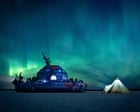
An eight-month expedition is set to depart from Norway next month to explore and document life in the Arctic Ocean, a region increasingly threatened by climate change and pollution. The mission, involving six scientists and six crew members, will utilize the French-built Tara polar station, a specialized floating laboratory designed to withstand extreme Arctic conditions.
The expedition will begin in Kirkenes, Norway, a remote town near the Russian border. From there, the team will embark on a journey into one of Earth's least-studied and most inaccessible regions. They will face months of complete darkness and temperatures as low as -50 degrees Celsius (-58 degrees Fahrenheit). The Tara polar station, measuring 26 meters long and 16 meters wide, is engineered to be frozen into the pack ice, allowing it to drift slowly across the North Pole towards Greenland.
This voyage aims to discover new species and gather crucial data on the Arctic ecosystem before irreversible changes occur due to rising global temperatures and environmental degradation. The scientists will be overwintering through the long polar nights, conducting research in a harsh and isolating environment. The expedition's departure is contingent on favorable conditions and the availability of an icebreaker to clear a path through the frozen seas.
Original source — read the full reporting at the publisher:
Read on The Guardian Environment