By Interestana AI Editorial — AI-drafted, human-overseen. How we report
Crypto Volatility Eases Amid Geopolitical Risks, Sovereign Debt Grows
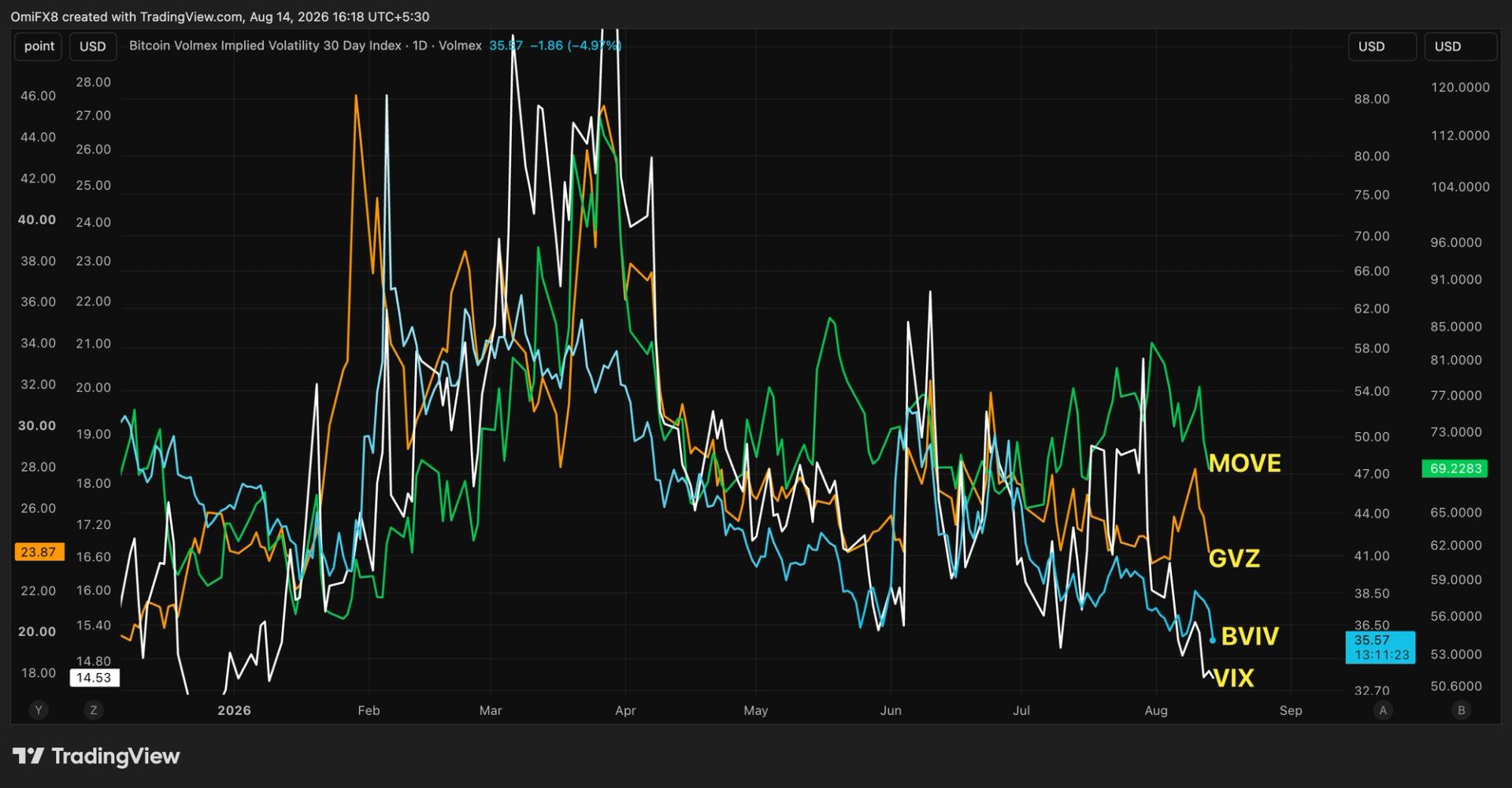
Cryptocurrency markets have seen a significant decrease in volatility, a trend that stands in contrast to persistent geopolitical risks stemming from U.S.-Iran relations and a notable increase in sovereign debt across various nations. This period of relative calm in digital asset markets, observed around August 14, 2026, suggests a potential maturation of the crypto space or a temporary lull before new market-moving events. The reduction in price swings for cryptocurrencies like Bitcoin and Ethereum indicates a possible shift from speculative trading towards more stable investment patterns, though the underlying drivers for such a change remain under scrutiny.
Concurrently, the global financial landscape is marked by elevated geopolitical tensions, particularly concerning the United States and Iran. These tensions can historically trigger market uncertainty and flight-to-safety behaviors, which typically impact risk assets. The fact that cryptocurrency markets are not mirroring this heightened geopolitical risk suggests a decoupling or a different set of influences currently dominating digital asset price action. This divergence warrants further analysis into the specific factors influencing crypto sentiment, such as institutional adoption, regulatory developments, or technological advancements within the blockchain ecosystem.
Adding to the complex global economic picture is the rising trend of sovereign debt. Governments worldwide have been increasing their borrowing, a move often associated with fiscal stimulus, post-pandemic recovery efforts, or managing national deficits. High levels of sovereign debt can influence interest rates, inflation, and overall economic stability, potentially impacting all asset classes, including cryptocurrencies. The interplay between increasing government debt and the perceived stability of digital assets presents a novel dynamic for investors and policymakers. The sustained rise in sovereign debt levels globally, coupled with the ongoing U.S.-Iran geopolitical risks, creates an environment where traditional financial markets might be expected to exhibit greater caution, yet the crypto market appears to be navigating these challenges with reduced internal volatility.
This period highlights a complex interplay of factors affecting global finance. While traditional markets might be bracing for potential disruptions from geopolitical events and fiscal pressures, the cryptocurrency sector is demonstrating a different pattern of behavior. The decrease in crypto volatility, juxtaposed with rising sovereign debt and persistent geopolitical concerns, suggests that the digital asset market may be evolving its risk assessment and response mechanisms. Further observation will be crucial to understand whether this trend represents a lasting shift in market dynamics or a temporary phase within the broader economic and geopolitical climate.
Original source — read the full reporting at the publisher:
Read on CoinDeskGet the weekly AI digest
AI news + new model releases, weekly. Drafted by our agents, reviewed by humans.