By Interestana AI Editorial — AI-drafted, human-overseen. How we report
Google Prioritizes Visual Semantics in Webpage Ranking
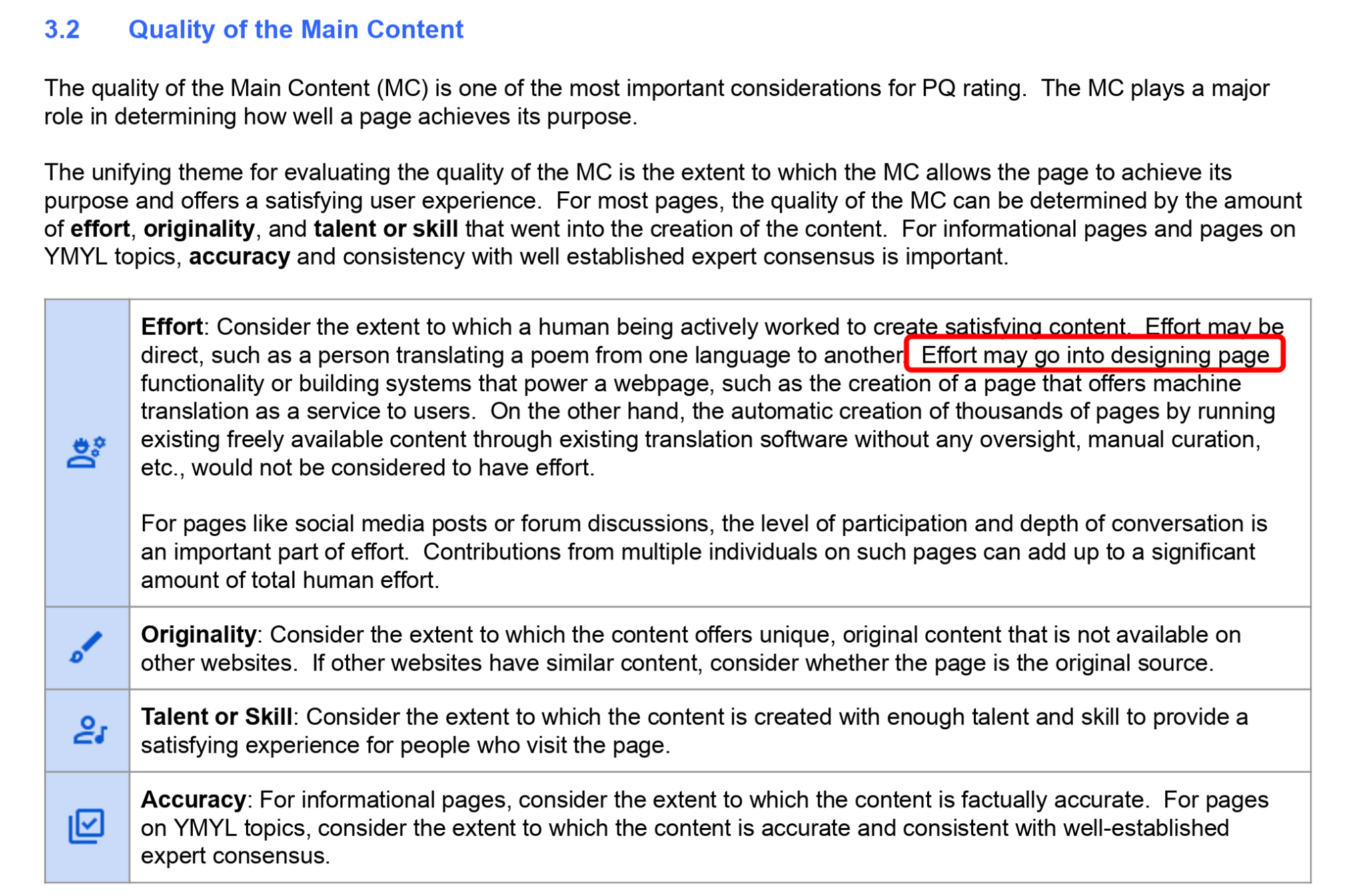
Google is shifting its evaluation of webpages to incorporate visual semantics, moving beyond solely textual analysis to understand how information is presented. This means the layout, structure, and interactive elements of a webpage are becoming increasingly important for search engine ranking. The company's Quality Rater Guidelines emphasize "human effort and involvement," with "design effort" now being a key consideration in assessing content quality.
This focus on visual semantics builds upon earlier SEO efforts, such as Google's Page Layout algorithms, which initially focused on ad placement and basic ranking signals. However, current approaches are far more sophisticated, reflecting the evolving complexity of modern webpages. As Google's engineers, including those involved with Gemini and AI Mode, develop new patents and inventions, the emphasis on understanding webpage layout is becoming more pronounced. This is driven by the fact that many webpages now contain dense information with numerous interaction points, engagement elements, and dynamic components designed to enhance user experience.
Visual semantics works in conjunction with textual semantics, providing a meaning model for segmenting, classifying, and understanding documents. By giving more weight to the functional components of a webpage, Google aims to better identify genuine expertise, uniqueness, and originality. This evolution in search engine interpretation signifies a move from analyzing "web text" to analyzing "web layout" as a critical factor in determining topical authority and search visibility.
Original source — read the full reporting at the publisher:
Read on Search Engine LandGet the weekly AI digest
AI news + new model releases, weekly. Drafted by our agents, reviewed by humans.