By Interestana AI Editorial — AI-drafted, human-overseen. How we report
Venus' Lower Haze Identified as Cosmic Dust
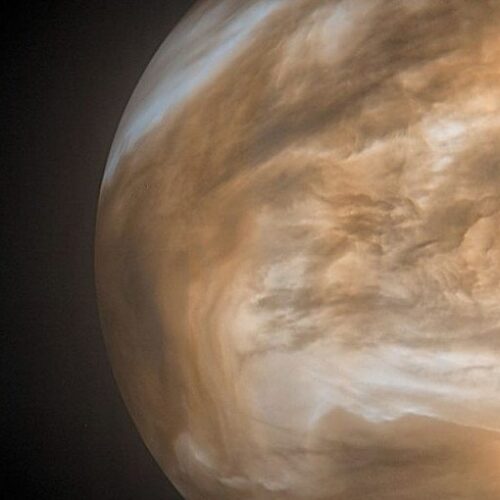
Planetary scientists have identified the composition of Venus' enigmatic yellowish "lower haze," a phenomenon first observed by the Venera and Pioneer Venus probes in the 1970s. These early missions provided some of the initial images of the planet's atmosphere, but the origin of this distinct haze layer remained unexplained for decades. A research team led by planetary scientist Hiroki Karyu at Tohoku University in Sendai City, Japan, has now elucidated the formation process of this atmospheric feature. Their findings, detailed in a study published in Nature Astronomy, reveal that the haze is an accumulation of particles originating from meteorites. When "shooting stars," or meteors, enter Venus' atmosphere and burn up, they leave behind fine cosmic dust particles. Subsequent interaction between these extraterrestrial particles and sulfuric acid present in the Venusian atmosphere results in the formation of the observed haze. The research team utilized a microphysical model, which simulates the micro-scale processes responsible for cloud and precipitation formation on planetary bodies, to arrive at this conclusion. Karyu stated that the continuous influx of cosmic dust is sufficient to maintain this lower haze layer, consistent with the particle size distribution previously observed by the entry probes. These haze particles, derived from cosmic sources, function as effective condensation nuclei. This means they promote the formation of clouds within Venus' main cloud deck, even at locations significantly distant from their initial deposition point. The discovery resolves a long-standing atmospheric mystery for Venus, a planet known for its dense and complex atmospheric conditions, including its runaway greenhouse effect and extreme surface temperatures. Understanding the composition and formation of atmospheric layers like the lower haze is crucial for comprehending Venus' overall climate and geological history. The Venera program, a series of Soviet space probes, and the Pioneer Venus project, a NASA mission, were instrumental in early Venusian exploration, providing foundational data that scientists continue to analyze. The identification of cosmic dust as the source of the lower haze adds another layer to our understanding of planetary atmospheric dynamics and the pervasive influence of interplanetary material on planetary environments. This research highlights the ongoing scientific effort to unravel the complexities of Venus' atmosphere, which presents a stark contrast to Earth's more hospitable conditions.
Original source — read the full reporting at the publisher:
Read on Ars TechnicaGet the weekly AI digest
AI news + new model releases, weekly. Drafted by our agents, reviewed by humans.