By Interestana AI Editorial — AI-drafted, human-overseen. How we report
US Walks Out of UN Security Council Meeting Amid Human Rights Commissioner Dispute
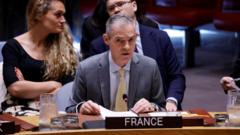
On Thursday, October 26, 2023, the United States delegation abruptly exited a United Nations Security Council meeting while the French representative was delivering remarks. This dramatic departure was a direct consequence of a contentious vote held earlier in the session concerning the extension of the mandate for the UN High Commissioner for Human Rights. The US delegation's walkout underscored a significant diplomatic rift that had materialized within the Security Council, a body tasked with maintaining international peace and security and often deliberating on critical human rights issues.
The core of the dispute stemmed from a vote where the United States cast its ballot against extending the term of the UN High Commissioner for Human Rights. Notably, the US found itself in alignment with North Korea and Russia on this particular vote, a grouping that signaled a divergence in international human rights policy and priorities. The UN High Commissioner for Human Rights is an independent official appointed by the UN Secretary-General and approved by the General Assembly, responsible for promoting and protecting human rights globally. Decisions regarding their tenure are typically subject to broad consensus among member states, making this opposition particularly noteworthy.
The United Nations Security Council, comprising fifteen member states including five permanent members (China, France, Russia, the United Kingdom, and the United States) who possess veto power, serves as a primary forum for addressing global security challenges. The alignment of the US with North Korea and Russia against the extension of a key human rights official's mandate suggests underlying geopolitical considerations and differing perspectives on human rights accountability. North Korea, in particular, has faced extensive international criticism and sanctions for its own human rights record, making its stance on the High Commissioner's role a point of contention. Russia, also a permanent member, has frequently clashed with Western nations on human rights issues and the scope of UN oversight.
The US walkout is a potent symbolic act, signaling profound disagreement with the proceedings or the positions articulated by other member states, most prominently France. Such actions can impede the Council's deliberative process and are often interpreted as a manifestation of escalating diplomatic tensions. The incident highlights the persistent challenges in forging consensus on sensitive human rights matters within the UN framework, especially when powerful nations hold opposing views. This event underscores the complex interplay of national interests, geopolitical alliances, and human rights principles that shape international diplomacy within the United Nations.
Original source — read the full reporting at the publisher:
Read on BBC World NewsGet the weekly AI digest
AI news + new model releases, weekly. Drafted by our agents, reviewed by humans.