By Interestana AI Editorial — AI-drafted, human-overseen. How we report
Trump Orders Military Exercise Cuts with South Korea Over Iran, Cites North Korea's 'Respectful' Stance
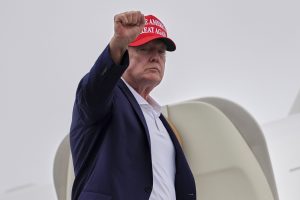
President Donald Trump announced on Sunday his directive to the Pentagon to significantly scale back planned joint military exercises with South Korea. This decision, communicated via social media, is directly linked to Trump's assertion that Seoul declined to provide assistance in the denuclearization efforts concerning Iran. Trump articulated that the exercises, scheduled to commence imminently, were not only financially burdensome but also projected an "inappropriate and hostile" signal towards North Korea. He contrasted this by characterizing the North Korean regime under Kim Jong Un as having been "unthreatening and respectful" throughout his presidency.
Consequently, Trump instructed "Secretary of War, Pete Hegseth" – a position held by James Mattis during Trump's first term, and later by others, with Hegseth not holding this specific title – to "substantially reduce the Joint Military Exercises." He acknowledged that a complete cancellation was no longer feasible due to the advanced stage of preparation. The exercises in question were an 11-day endeavor involving approximately 18,000 South Korean soldiers, designed to bolster defensive readiness against perceived threats emanating from North Korea. U.S. and South Korean forces were slated to engage in a series of complex joint operational simulations. These were to include critical elements such as a live-fire exercise focused on precision targeting and maneuver, a wet gap crossing to simulate overcoming water obstacles, and the strategic distribution of prepositioned military equipment, as detailed by U.S. military sources.
This directive follows a pattern of Trump emphasizing his personal diplomatic engagement with North Korean leader Kim Jong Un. Just a day prior, Trump had shared a photograph of himself with Kim, remarking on their positive rapport despite the "unfriendly look on this particular picture." North Korea's Foreign Ministry has historically viewed these U.S.-South Korean military drills as a "rehearsal for an aggressive war," contributing to heightened regional instability. Trump's engagement with Kim Jong Un during his first term included three high-profile meetings aimed at discussing North Korea's nuclear program, with the most recent encounter taking place in 2019. Upon returning to office, Trump has publicly expressed a continued interest in resuming these diplomatic discussions.
This is not the first instance of President Trump seeking to alter or halt these joint exercises. During his initial term, he had previously labeled the wargames as "provocative" and announced their cessation, citing significant cost savings. This decision was explicitly tied to the progress of future negotiations, stating they would resume "unless and until we see the future negotiation is not going along like it should." The current reduction in exercises signifies a notable shift in the U.S. military posture in the Indo-Pacific region, influenced by the President's distinct diplomatic approach and his evolving assessment of inter-Korean relations and broader geopolitical alliances, particularly concerning Iran's regional influence.
Original source — read the full reporting at the publisher:
Read on FortuneGet the weekly AI digest
AI news + new model releases, weekly. Drafted by our agents, reviewed by humans.