ULA's Final Atlas V Rockets Reserved for Boeing Starliner
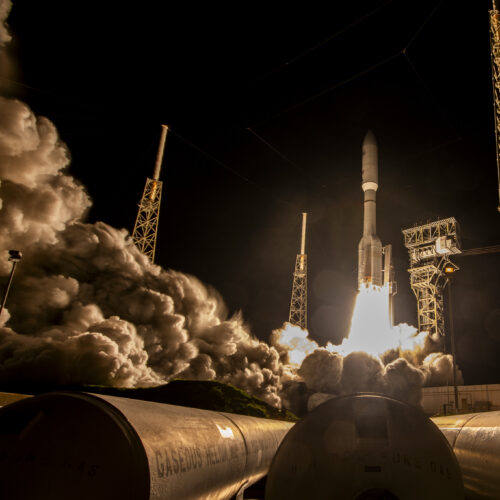
United Launch Alliance's (ULA) Atlas V rocket program is nearing its conclusion, with the final six launches exclusively reserved for Boeing's Starliner crew capsule. The last Atlas V launch for Amazon's Project Kuiper constellation occurred last Thursday, lifting off from Cape Canaveral Space Force Station in Florida at 12:30 am EDT (04:30 UTC). This mission successfully deployed 29 satellites into orbit, advancing Amazon's goal of providing initial broadband services. The satellites were released less than an hour after launch and will use their onboard propulsion to reach their operational altitude of 392 miles (630 kilometers) from their initial deployment altitude of approximately 289 miles (465 kilometers).
The Atlas V rocket has been a workhorse for ULA, completing 99 successful missions prior to this latest launch. The decision to dedicate the remaining rockets to the Starliner program highlights the critical role the Atlas V plays in supporting NASA's Commercial Crew Program, which aims to transport astronauts to the International Space Station. Boeing's Starliner has faced several delays, making the availability of these launch vehicles crucial for its operational readiness and crewed missions.
ULA is transitioning to its new Vulcan Centaur rocket, which is intended to replace both the Atlas V and Delta IV Heavy rockets. The Vulcan Centaur's first successful launch occurred in January 2024, carrying Astrobotic's Peregrine lunar lander. The company aims for the Vulcan Centaur to be its primary launch vehicle for a variety of missions, including commercial satellite deployments and government payloads. The retirement of the Atlas V signifies a significant shift in ULA's launch capabilities and its strategic focus on next-generation launch systems.
Original source — read the full reporting at the publisher:
Read on Ars Technica