By Interestana AI Editorial — AI-drafted, human-overseen. How we report
Ukrainian Drones Overwhelm Russian Tanks' New Active Protection System
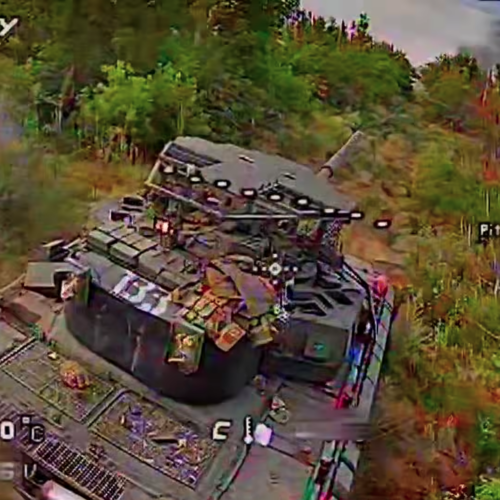
Russian tanks equipped with the newly developed Arena-M active protection system have engaged in combat for the first time in Ukraine, a system designed to intercept and destroy incoming drones. However, the technology's initial deployment in the conflict zone has demonstrated only partial success, as Ukrainian forces were still able to destroy Russian armored vehicles by employing overwhelming numbers of drones. The first confirmed battlefield appearance of the Arena-M system occurred during a company-sized assault by Russian forces, which included tanks and other armored vehicles, in the Donetsk Oblast region of eastern Ukraine on July 22. Ukrainian defenders successfully repelled this attack, and video evidence captured by the defenders documented kamikaze drone strikes that resulted in the destruction of at least seven T-72B3A tanks. Notably, some of these destroyed tanks were equipped with the Arena-M system, as reported by Euromaidan Press. Despite the successful drone attacks, Ukrainian soldiers also observed the Russian Arena-M system effectively neutralizing some incoming drones. Journalists Dmytro Putiata and Rob Lee noted these observations, indicating that the system did perform its intended function against a portion of the drone threat. The Ukrainian forces reported that it took an average of 15 to 20 drones to successfully destroy each targeted tank, suggesting that while the Arena-M system could intercept some drones, it was ultimately unable to prevent the destruction of the tanks when faced with a sustained, high-volume drone assault. This combat debut provides critical insights into the evolving tactics and technological countermeasures being employed in the ongoing conflict, particularly the challenges faced by armored vehicles against increasingly sophisticated drone warfare. The Arena-M system, developed by Russia, is intended to provide a defensive layer against threats like loitering munitions and anti-tank guided missiles, utilizing radar and countermeasures to detect and neutralize incoming projectiles. Its performance in this engagement suggests that while it offers some level of protection, its effectiveness may be significantly diminished when confronted with saturation attacks, a tactic increasingly utilized by Ukrainian forces to overcome fortified positions and advanced defensive technologies. The ongoing conflict in Ukraine continues to serve as a testing ground for military hardware and strategies, with both sides adapting their approaches based on battlefield performance and technological advancements.
Original source — read the full reporting at the publisher:
Read on Ars TechnicaGet the weekly AI digest
AI news + new model releases, weekly. Drafted by our agents, reviewed by humans.