By Interestana AI Editorial — AI-drafted, human-overseen. How we report
Uber Launches Wayve Robotaxi Service in London
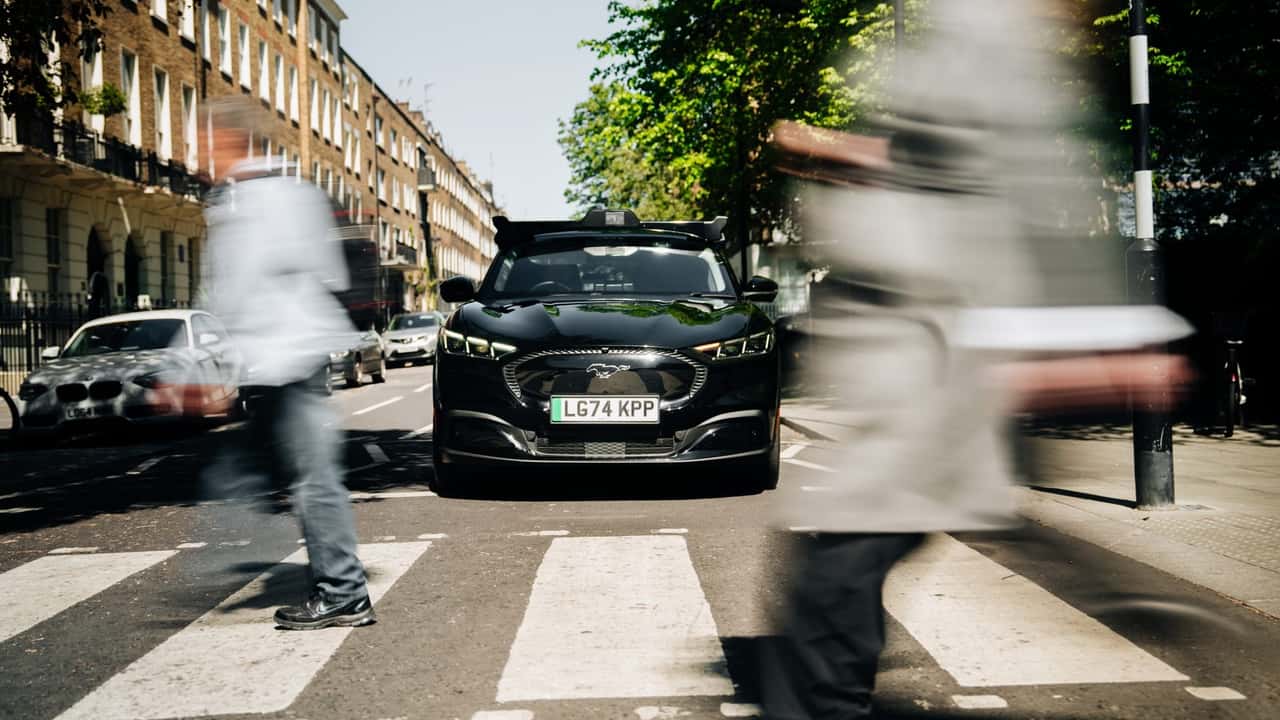
Uber and Wayve have launched the United Kingdom's first fully autonomous robotaxi service in London, marking a significant milestone in the deployment of self-driving vehicles for public ride-hailing. The service, available through the Uber app, utilizes Ford Mustang Mach-E electric vehicles equipped with Wayve's proprietary artificial intelligence-driven autonomous driving system. This deployment signifies a major step forward for Wayve, a London-based AI company focused on developing AI for autonomous vehicles, and for Uber's expansion into autonomous ride-sharing.
Wayve's technology distinguishes itself by relying on end-to-end deep learning, enabling its vehicles to learn and adapt to complex urban driving environments through extensive real-world data. Unlike some competitors that rely heavily on detailed pre-mapped environments and sensor fusion, Wayve's approach emphasizes the vehicle's ability to infer driving decisions directly from sensor inputs. This method is designed to make the system more scalable and adaptable to new locations and changing road conditions. The company has been testing its autonomous vehicles in London for several years, accumulating millions of miles of driving data to refine its AI models.
The introduction of this service in London positions Wayve and Uber ahead of other autonomous vehicle developers in the UK market. While companies like Waymo, a subsidiary of Alphabet, have conducted extensive testing and operations in cities like Phoenix, Arizona, and San Francisco, California, this launch represents the first commercial robotaxi service available to the public in the UK. The initial operational area for the service is focused on specific zones within London, with plans for gradual expansion as the technology is proven and regulatory frameworks evolve. The vehicles are designed to operate without a safety driver behind the wheel, a key differentiator for a fully autonomous service.
This collaboration between Uber and Wayve leverages Uber's extensive ride-hailing network and Wayve's advanced AI driving technology. For Uber, this partnership is part of its broader strategy to integrate autonomous vehicles into its platform, aiming to reduce operational costs and enhance service availability. Wayve, on the other hand, gains a crucial real-world deployment opportunity and a direct channel to customers via Uber's established user base. The success of this service in London could pave the way for similar deployments in other major cities globally, accelerating the adoption of autonomous mobility solutions. The regulatory landscape for autonomous vehicles in the UK is still developing, and this launch will likely provide valuable insights for policymakers and regulators.
The Ford Mustang Mach-E vehicles used in the service are equipped with a suite of sensors, including cameras and lidar, integrated with Wayve's AI software. The system processes vast amounts of data in real-time to navigate traffic, obey road rules, and ensure passenger safety. Wayve has emphasized its commitment to safety throughout its development process, conducting rigorous testing and validation to meet stringent safety standards. The company's approach to AI development is rooted in machine learning principles, aiming to create a more robust and generalizable autonomous driving system that can handle the unpredictable nature of urban driving.
Original source — read the full reporting at the publisher:
Read on InsideEVsGet the weekly AI digest
AI news + new model releases, weekly. Drafted by our agents, reviewed by humans.