By Interestana AI Editorial — AI-drafted, human-overseen. How we report
Trump Proposes Militarized White House Ballroom Drone Port
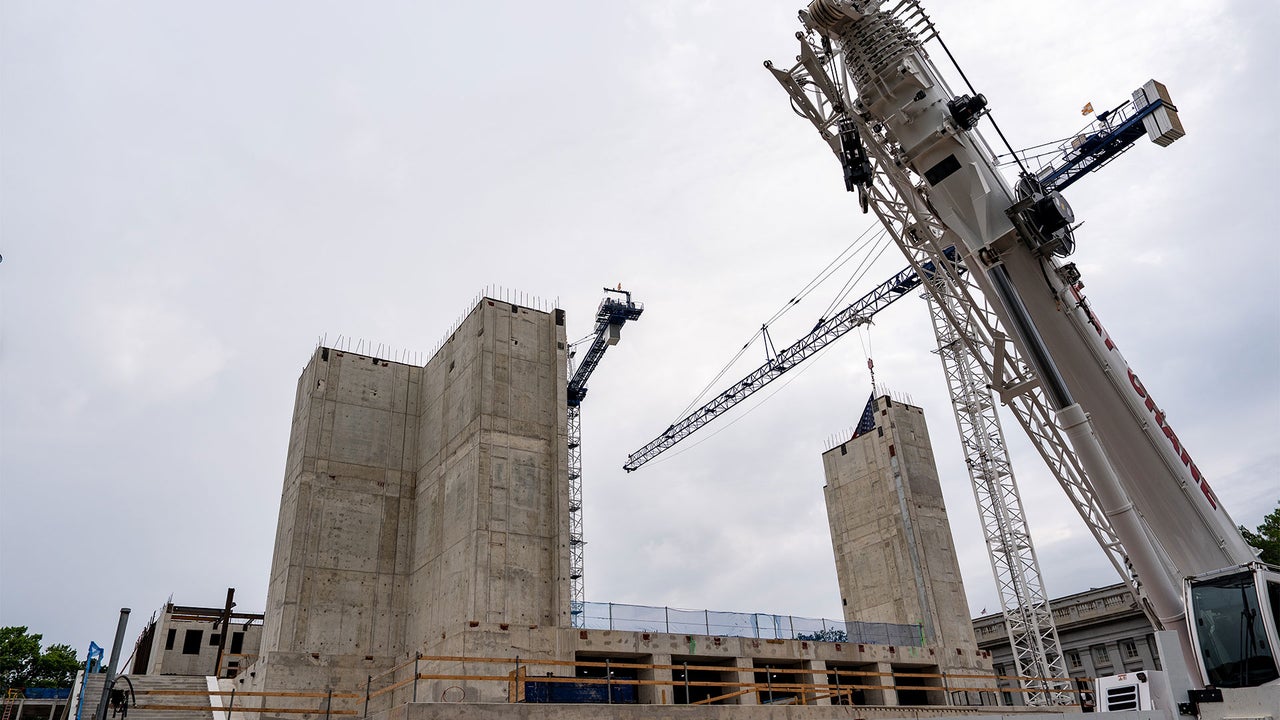
President Donald Trump has proposed an ambitious and controversial addition to the White House: an AI-fueled drone port atop the new White House ballroom designed to house missile-bearing unmanned aerial vehicles and gun-toting troops. This proposed defense system, ostensibly aimed at protecting the 18-acre complex and the nation's capital from aerial threats, represents a significant escalation in the perceived security needs of the presidential residence. The plan, as outlined by Trump, envisions a futuristic defense array that contrasts sharply with current, more discreet security measures already in place.
Ironically, a functional drone port, operated by the U.S. Secret Service, is already operational a few hundred feet away from the White House complex, situated on a Treasury Department building. This existing facility, which has not been previously reported, is equipped with cameras and sensors to provide aerial surveillance and is used to deploy small, unarmed UAVs. These drones operate under a model known as "drone as first responder," acting as flying cameras to assess potential threats. This model is widely adopted by hundreds of police agencies across the United States, often enhanced by AI software for navigation and target tracking. The existence of this Secret Service drone operation could potentially undermine Trump's legal arguments for the necessity of the new ballroom construction, which he has justified on national security grounds related to aerial attack prevention.
The justification for the drone port has also been cited by Trump as a basis for the construction of a massive arch outside the gates of Arlington National Cemetery. However, the current Secret Service installation is markedly less imposing than Trump's vision, which reportedly includes rows of attack drones modeled after those used in U.S. military strikes. Drone experts have described Trump's concept as outlandish, with some noting that by the time a drone is close enough to require interdiction, it has already penetrated too far into protected airspace. Matt Sloane, co-founder of SkyfireAI, a company that develops software for public safety drones, suggested that a more realistic approach for the White House would be to adopt a system similar to what the Secret Service is currently employing next door, emphasizing the rapid deployment of drones as an initial response rather than a heavily armed deterrent.
The logistical and legal challenges associated with Trump's proposal are substantial. The integration of missile-bearing drones and armed troops directly at the White House would require extensive coordination between multiple government agencies, including the Secret Service and potentially the Department of Defense, and would necessitate significant regulatory approvals. Furthermore, the deployment of offensive weaponry in such close proximity to a civilian and governmental hub raises complex legal questions regarding rules of engagement and the potential for unintended escalation. The feasibility of such a system, particularly its effectiveness against sophisticated aerial threats versus its potential to create new security risks, remains a subject of debate among security experts.
Original source — read the full reporting at the publisher:
Read on Fast CompanyGet the weekly AI digest
AI news + new model releases, weekly. Drafted by our agents, reviewed by humans.