By Interestana AI Editorial — AI-drafted, human-overseen. How we report
Trump Seeks MMR Vaccine Split; Pharma Rejects Idea
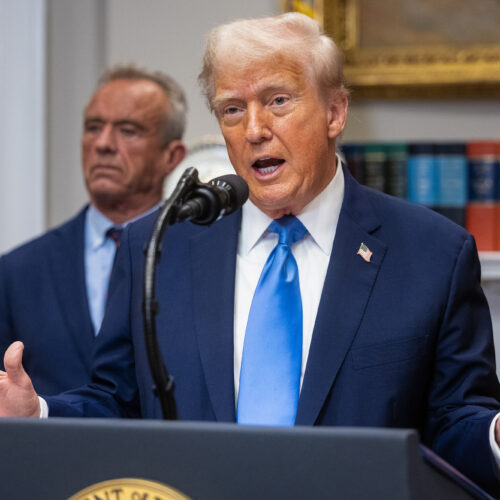
Former President Donald Trump has proposed that pharmaceutical companies separate the Measles, Mumps, and Rubella (MMR) vaccine into individual doses, a suggestion that has ignited swift and strong backlash from public health organizations, medical experts, and the pharmaceutical industry itself. The proposal, made on Monday, has been characterized by critics as "dangerous," "unscientific," "false and misleading," and "so wrong," with significant concerns raised about its potential to jeopardize children's health. This stance aligns with a broader pattern of opposition from Trump and his former Health Secretary, Robert F. Kennedy Jr., to established public health and scientific consensus, particularly concerning vaccines. Kennedy Jr., notably, lacks a formal background in science, medicine, or public health, yet has been a prominent voice in advocating for vaccine skepticism.
The American Academy of Pediatrics has been a vocal opponent of Trump's previous actions regarding federal childhood vaccine recommendations. The organization, which deemed Trump's latest order "not only disheartening but dangerous," is actively involved in legal challenges against prior policy changes implemented under Trump's administration and Kennedy Jr.'s tenure. In March, the Academy, alongside other medical groups, successfully secured a temporary injunction that reversed most of these changes, underscoring the medical community's unified front against what they perceive as scientifically unfounded policies. This legal victory highlights the established medical consensus and the rigorous scientific basis underpinning current vaccine schedules and formulations.
While the scientific and public health communities' negative reactions were anticipated, the immediate and forceful pushback from the pharmaceutical industry itself was less expected. Major pharmaceutical companies, the primary manufacturers of vaccines, have historically defended the safety and efficacy of their products, including the combined MMR vaccine. The industry's rejection of Trump's proposal suggests a fundamental disagreement not only on the scientific merits but also on the practical and logistical implications of such a significant alteration to a widely administered vaccine. The combined MMR vaccine has been a cornerstone of childhood immunization programs for decades, credited with dramatically reducing the incidence of these serious diseases. The proposal to split it raises questions about manufacturing complexity, cost, and the potential for reduced vaccination rates if the process becomes more cumbersome.
The scientific rationale for combining the MMR vaccine into a single shot is rooted in decades of research demonstrating its safety and effectiveness. Combining the antigens allows for fewer injections, which can improve vaccine uptake and reduce the burden on healthcare systems and parents. The development of combination vaccines is a standard practice in vaccinology, aiming to simplify immunization schedules while maintaining robust protection against multiple diseases. The proposal to separate these components runs counter to this established approach and raises concerns about potential unintended consequences for public health initiatives aimed at eradicating or controlling measles, mumps, and rubella. The pharmaceutical industry's opposition, therefore, likely stems from a combination of scientific validation of the existing formulation and a pragmatic assessment of the operational challenges and public health risks associated with such a drastic change.
Original source — read the full reporting at the publisher:
Read on Ars TechnicaGet the weekly AI digest
AI news + new model releases, weekly. Drafted by our agents, reviewed by humans.