By Interestana AI Editorial — AI-drafted, human-overseen. How we report
Trump Threatens EU with Tariffs Over Canada's Associate Membership Offer
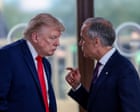
Donald Trump, the former President of the United States, has issued a stern warning to the European Union, threatening to impose "serious tariffs" in response to an invitation extended by European Commission President Ursula von der Leyen. The invitation proposes that Canada be granted the EU's first "associate member" status. This significant diplomatic overture from Brussels to Ottawa is framed by von der Leyen as a necessary step for democratic nations facing what she described as a "fracture in the international rules-based system." She emphasized that this burgeoning partnership between the European Union and Canada is intended to foster "common strength" and is not directed against any third party.
The offer was formally communicated and addressed to Canada's Prime Minister, Mark Carney, who was scheduled to deliver remarks to the European Parliament on Thursday. This proposed associate membership signifies a deepening of the geopolitical alignment between the EU and Canada, underscoring a shared commitment to democratic values and a collaborative approach to navigating complex global challenges. This initiative reflects a broader European strategy aimed at bolstering alliances and enhancing collective resilience within an increasingly intricate international landscape. The move suggests a desire by the EU to solidify its relationships with like-minded democracies as a counterweight to perceived global instability.
In direct response to Trump's tariff threats, France's Europe Minister, Benjamin Haddad, publicly stated on Thursday that the United States possesses no authority to veto decisions made by the European Union. Haddad articulated to the Public Sénat TV channel that "It is not up to the United States, or anyone else, to choose the political and geopolitical direction of the Europeans." This assertion highlights a clear divergence in perspectives regarding international relations and underscores the European Union's insistence on its autonomy in shaping its own foreign and geopolitical policies. The situation is being closely monitored, with ongoing live coverage detailing developments, including Prime Minister Mark Carney's address to the European Parliament.
The context of these geopolitical maneuvers extends to broader discussions concerning global economic stability and international trade relations, with potential implications for existing transatlantic partnerships. The article also briefly mentions a separate point where an individual named Warsh acknowledged changing geopolitics as a driver of inflation but refrained from explicitly naming the US-Israel war with Iran. While the provided text does not fully elaborate on Trump's specific response beyond the tariff threat, his immediate reaction clearly indicates strong opposition to this deepening EU-Canada relationship, suggesting potential trade friction and a widening rift in transatlantic relations.
Original source — read the full reporting at the publisher:
Read on The Guardian WorldGet the weekly AI digest
AI news + new model releases, weekly. Drafted by our agents, reviewed by humans.