By Interestana AI Editorial — AI-drafted, human-overseen. How we report
Trump Signs Order on Childhood Vaccines
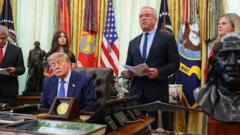
The Trump administration has issued an executive order that seeks to limit and potentially split the recommended schedule for childhood vaccines. This directive, signed by President Donald Trump, signals a significant departure from established public health guidelines and has ignited concerns among medical professionals and organizations. The order's specifics regarding the "limitation" and "splitting" of vaccine schedules are not fully detailed in the initial announcement, but the intent appears to be a re-evaluation of the current vaccination protocols for children. This move follows a long-standing, though scientifically discredited, association pushed by the Trump administration linking vaccines to autism. The administration's stance on this issue has been a point of contention, with public health bodies consistently refuting any causal relationship between vaccines and autism spectrum disorder. The Centers for Disease Control and Prevention (CDC) and the American Academy of Pediatrics (AAP) currently recommend a comprehensive vaccination schedule designed to protect infants and children from a range of serious infectious diseases, starting shortly after birth and continuing through adolescence. This schedule is based on extensive scientific research and epidemiological data, aiming to achieve herd immunity and prevent outbreaks. The executive order's implications for public health are a primary concern. Critics argue that altering or delaying vaccination schedules could leave children vulnerable to preventable diseases, potentially leading to an increase in cases of measles, mumps, polio, and other serious illnesses. They emphasize that the current schedule is optimized for the youngest and most vulnerable populations, with vaccines administered at specific ages when children are most susceptible to particular diseases and when the immune system can best respond. The scientific consensus, supported by numerous studies involving millions of children worldwide, has repeatedly affirmed the safety and efficacy of vaccines and has found no link between vaccines and autism. Organizations such as the World Health Organization (WHO) and the National Academy of Medicine have also endorsed the current vaccination schedules. The executive order's directive to "limit and split" vaccines could lead to a fragmented approach to immunization, potentially creating confusion for parents and healthcare providers. It may also undermine efforts to achieve high vaccination rates, which are crucial for community-wide protection. The administration's rationale behind this order is expected to be further elaborated, but it is likely to stem from concerns about vaccine safety and the number of doses administered to young children. However, public health experts are urging caution, emphasizing that any changes to established vaccination protocols should be guided by rigorous scientific evidence and a thorough understanding of immunological principles to ensure the continued health and safety of the nation's children. The order's implementation will likely involve extensive review by health agencies and could face legal challenges from public health advocates.
Original source — read the full reporting at the publisher:
Read on BBC World NewsGet the weekly AI digest
AI news + new model releases, weekly. Drafted by our agents, reviewed by humans.