By Interestana AI Editorial — AI-drafted, human-overseen. How we report
US Pulls Asia Aircraft Carrier for Middle East
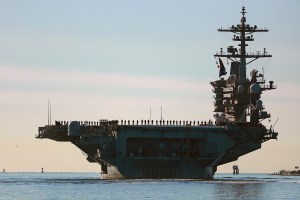
The United States has redeployed its aircraft carrier USS George Washington from the western Pacific to the Middle East, a move that leaves the strategically vital Asia-Pacific region without a key American naval asset. This redeployment is driven by increasing concerns over mental health and supply chain issues aboard the USS Abraham Lincoln, which has had its deployment extended to support operations against Iran. The USS George Washington is expected to replace the USS Abraham Lincoln in the Middle East, highlighting the strain on U.S. naval resources due to ongoing operations in the region. Analysts suggest that this shift in focus and resources away from the Asia-Pacific could be perceived by China as an opportunity to advance its regional ambitions.
Greg Poling, director of the Southeast Asia Program at the Center for Strategic and International Studies, noted that the administration's stated priority of the Pacific region is contradicted by this action, which appears to be a retreat from Asia to focus on the Western Hemisphere. Poling also indicated that allies in the Pacific are unsettled by the unpredictability of the current U.S. administration. He further stated that Beijing is likely pleased by this "U.S. distraction" and the resulting frustration among U.S. allies and partners. The absence of a U.S. aircraft carrier in the Pacific, even if temporary, could embolden China, which views the U.S. military presence as an impediment to its rise and its aspirations for Taiwan.
China views the U.S. military presence in the region as a threat to its growing influence and an obstacle to its goal of unifying Taiwan with the mainland. The United States, however, maintains that the economic importance of the Pacific region necessitates a strong presence. While the departure of a U.S. carrier is not expected to trigger an immediate invasion of Taiwan, it provides China with an additional opening to demonstrate its military strength and assert its regional dominance. Bryan Clark, a former Navy submariner, commented that the carrier's absence presents China with another opportunity to showcase its capabilities. The Navy may deploy another carrier to the Pacific in the coming months, but the current gap underscores the operational tempo and the impact on American sailors. The open-ended nature of operations against Iran is reportedly taxing the endurance of U.S. naval personnel, leading to extended deployments and potential readiness issues. This strategic pivot also aligns with the Trump administration's broader focus on the Western Hemisphere, a policy that appears to diverge from previous commitments to the Asia-Pacific. The redeployment signifies a significant shift in naval asset allocation, prioritizing the Middle East theater at the expense of a visible carrier presence in the Pacific, a region where U.S. influence is increasingly challenged by China's assertive posture.
Original source — read the full reporting at the publisher:
Read on FortuneGet the weekly AI digest
AI news + new model releases, weekly. Drafted by our agents, reviewed by humans.