By Interestana AI Editorial — AI-drafted, human-overseen. How we report
Iran Shifts to Offensive Stance Amid Economic Pressure
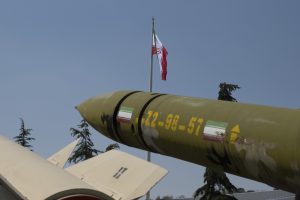
President Donald Trump has shifted his strategy towards Iran from direct military confrontation to economic pressure, aiming to compel the nation to reopen the Strait of Hormuz and stabilize global oil markets. Following 40 days of significant bombing and two weeks of daily attacks, the U.S. is now employing a naval blockade as its primary tool. However, Iran has indicated it will not remain passive if diplomatic progress stalls. A senior Iranian official informed Reuters on Monday that Iran has transitioned from a defensive posture to a "fully offensive" one, attributing this change to the ongoing stalemate in negotiations with the U.S. The official warned that unless the U.S. enacts the June ceasefire agreement within the coming weeks, Iran is prepared to launch a "timely and precise" attack to break the blockade. This official further stated that "Iranian entities must be prepared to escalate tensions in the Strait of Hormuz and wider region, as Iran will be ready to make decisions and take action on difficult decisions." This threat emerges subsequent to Iran's recent military reorganization, which has been characterized as more aggressive, with various government factions reportedly abandoning hopes for negotiation. Sources cited by The Wall Street Journal indicated that Arab intelligence has detected preparations for a broader conflict. These preparations include the strategic deployment of Iranian commanders, weaponry, and intelligence assets to regional militias that are aligned with the Iranian regime. Furthermore, Iran's Islamic Revolutionary Guard Corps (IRGC) has reportedly developed contingency plans for increased escalation. These plans encompass actions such as sabotaging internet cables in the Persian Gulf, inciting unrest in neighboring countries with significant Shia populations, and potentially initiating a ground assault into Kuwait. Mohammad Hassan Sangtarash, a defense analyst based in Tehran with close ties to the Iranian government, shared with The Wall Street Journal that "There is also a widespread view in Iran that the main war has not yet begun." He elaborated that current actions are being interpreted through the framework of "salami-slicing" tactics, suggesting a gradual escalation rather than an immediate full-scale engagement. The U.S. military's own vulnerabilities have also surfaced during this period of heightened tension, potentially influencing the strategic calculus for both sides.
Original source — read the full reporting at the publisher:
Read on FortuneGet the weekly AI digest
AI news + new model releases, weekly. Drafted by our agents, reviewed by humans.