By Interestana AI Editorial — AI-drafted, human-overseen. How we report
Trump's $5,000 Dividend Pledge Faces Skepticism as Details Shift, Poll Shows
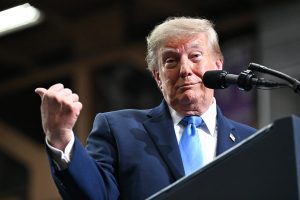
Former President Donald Trump has introduced a significant financial incentive, promising a $5,000 "dividend" to every adult U.S. citizen should the Republican party achieve a sweep of both the House of Representatives and the Senate in the upcoming midterm elections. This pledge, first articulated on September 9th at a Republican midterm convention in Dallas, is framed by Trump as a reward for the nation's "tremendous strength and success." However, the specifics regarding the distribution of this substantial sum have reportedly been in flux, with details seemingly evolving as the election approaches. This perceived inconsistency has led to considerable voter skepticism regarding the feasibility and sincerity of the promise.
An Economist and YouGov poll conducted in September aimed to gauge public confidence in this initiative. The findings were stark: only 21% of registered voters indicated they "definitely or probably would" expect Trump to issue the $5,000 dividend if Republicans regain control of Congress. In contrast, a substantial majority, comprising 57% of respondents, stated that he "probably or definitely would not" fulfill this commitment. Even among staunch Republican supporters, confidence wavers, with less than half (45%) expressing belief that Trump would follow through on his pledge.
This initiative emerges against a backdrop of persistent challenges in political engagement worldwide, particularly concerning low voter turnout. International IDEA, an intergovernmental organization focused on electoral democracy, has documented a decline in voter participation over recent decades, even as the number of countries holding elections has increased. To combat this trend, various jurisdictions have explored diverse strategies, ranging from implementing paid holidays from work to organizing transportation services to polling stations. Trump's $5,000 dividend proposal represents a more direct, albeit unconventional and potentially controversial, approach to voter mobilization, aiming to incentivize participation through a significant cash payment.
The shifting details surrounding the dividend's eligibility and the sheer scale of the financial commitment have fueled doubts about its practical implementation. The ambiguity of the proposal, coupled with the historical context of political promises, contributes to the low confidence levels observed in the Economist and YouGov poll. The poll's results suggest that while the prospect of receiving a substantial cash payment might be appealing, voters are critically evaluating the credibility of the source and the perceived likelihood of the promise being kept. The economic ramifications of distributing such a large sum of money, if the proposal were to be enacted, would undoubtedly be a significant consideration, though the immediate focus of the poll was on voters' belief in the promise itself.
Original source — read the full reporting at the publisher:
Read on FortuneGet the weekly AI digest
AI news + new model releases, weekly. Drafted by our agents, reviewed by humans.