By Interestana AI Editorial — AI-drafted, human-overseen. How we report
157 Cities Advance Climate Action Amid Federal Rollbacks
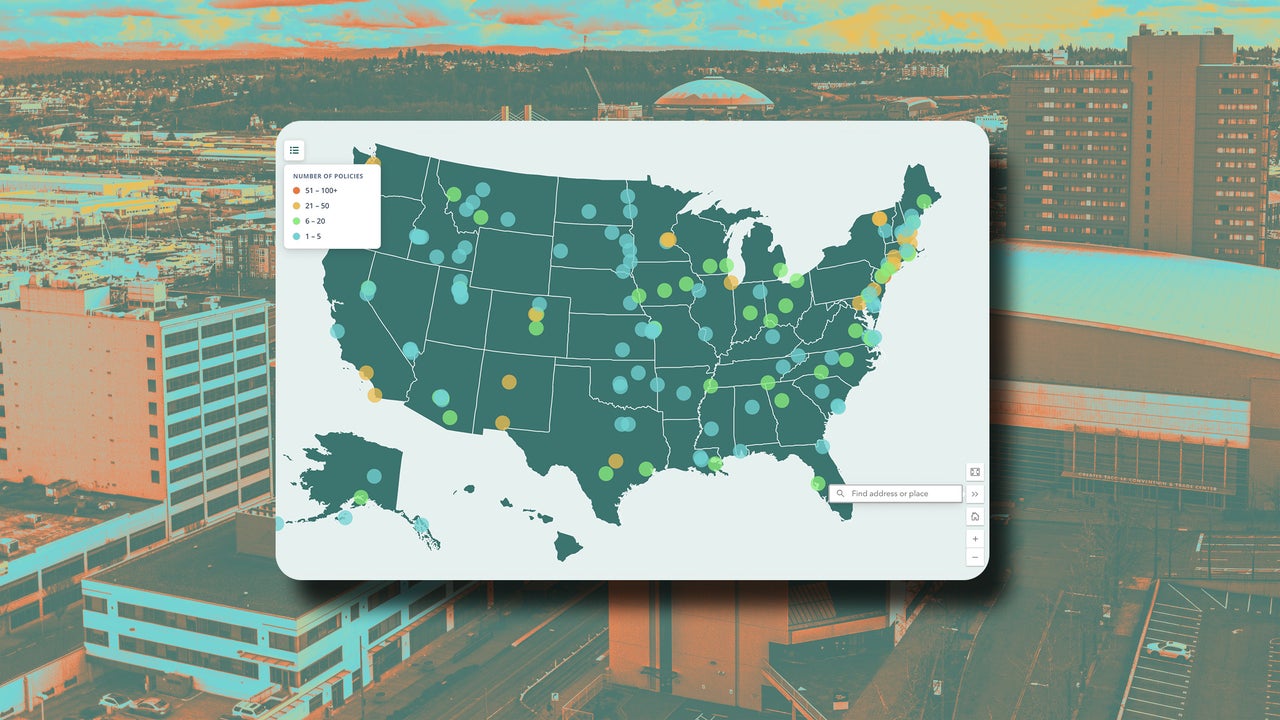
In June 2026, the Trump administration issued directives preventing states from utilizing billions of dollars in federal rebates from the Inflation Reduction Act to subsidize homeowners' transitions from fossil fuel appliances to climate-friendly heat pumps. This federal action contrasted with ongoing local initiatives, such as a heat pump rebate program in Tacoma, Washington, funded by the city and its local power utility. This situation exemplifies how, despite federal retrenchment from climate action under the Trump administration, local leaders at the city and state levels continue to advance climate progress through independent policy development.
A new resource, the U.S. City Climate & Energy Policy Database, developed by the University of Maryland’s Center for Global Sustainability, meticulously documents these city-level climate actions. The database encompasses over 1,400 distinct policies and programs implemented across 157 cities nationwide. These initiatives range from enhancing building efficiency and establishing financial incentive programs to undertaking climate mitigation strategies, such as increasing urban tree canopy to combat extreme heat in vulnerable areas. The database provides a comprehensive overview of local climate efforts, offering a clear picture of the diverse approaches cities are taking to address environmental challenges.
The U.S. City Climate & Energy Policy Database features an interactive map that visually represents cities with the highest concentration of climate policies. Additionally, it includes a detailed dataset that provides direct links to individual city climate plans. Each policy is categorized by its geographical location, the sector it addresses (e.g., transportation, electricity, waste management), and the specific policy area it covers. This granular categorization allows for in-depth analysis of the types of climate actions being pursued and their geographical distribution. The tool aims to be a central repository for understanding the landscape of urban climate policy in the United States.
Nate Hultman, director of the Center for Global Sustainability at the University of Maryland, stated that the database offers "the clearest picture yet of how cities across the country are responding to the current moment with policy." He further emphasized the significance of the findings, noting that "What stands out is both the breadth of action and the opportunity it reveals: cities and states are pursuing clean energy and energy efficiency, and understanding that landscape is the first step toward accelerating action where it is needed most." The database also highlights specific examples of local climate initiatives, such as Cleveland's comprehensive plan to retrofit city facilities with renewable energy sources and implement energy efficiency upgrades, aligning with the city's broader climate objectives.
Original source — read the full reporting at the publisher:
Read on Fast CompanyGet the weekly AI digest
AI news + new model releases, weekly. Drafted by our agents, reviewed by humans.