By Interestana AI Editorial — AI-drafted, human-overseen. How we report
Labor Day Highlights 75,000 Lost Manufacturing Jobs Ahead of Midterms
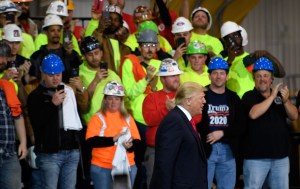
Union workers and their families are observing Labor Day amidst significant economic challenges, including the loss of approximately 75,000 manufacturing jobs and rising costs for essential goods like food and gasoline. This economic landscape is prompting many to question their financial well-being, echoing Ronald Reagan's famous 1980 question, "Are you better off now than you were four years ago?" The broader economic outlook for America's unionized workforce is described as bleak, with persistent threats from artificial intelligence and robotics impacting job security. Furthermore, pledges made by both U.S. and international corporations to invest in new manufacturing plants have largely remained unfulfilled, contributing to a sense of economic stagnation. The disruption extends to public sector employment, with roughly 400,000 federal job cuts during President Donald Trump's second term affecting many union-represented positions. A labor studies scholar suggests that weariness and wariness will characterize the sentiment of blue-collar voters heading to the polls in the November midterm elections. Candidates who present practical economic recovery plans and demonstrate empathy for citizens struggling with household expenses are likely to garner significant support from the union vote.
Historically, the majority of union members have aligned with Democratic candidates, although this support has seen fluctuations since the 1970s. The 2024 presidential election continued this trend, with most union members voting Democratic, albeit at a lower rate compared to the 1960s. The influence of union voters is particularly pronounced in key swing states such as Michigan, Pennsylvania, and Nevada, where the proportion of union members among the electorate exceeds the national average of 10%. In closely contested House and Senate races, even a marginal shift in union voting patterns can prove decisive in determining election outcomes. The significance of the union vote in the upcoming November elections is therefore substantial, potentially swaying results in critical races.
Data from the Bureau of Labor Statistics reveals a notable decline in unionized workers in the U.S. over the past four decades. In 1983, union representation extended to 20.1% of the American workforce. By 2025, this figure had fallen to 10.0%, equating to 14.7 million individuals. The disparity in union membership between the public and private sectors is stark: 32.9% of public sector workers are unionized, a rate more than five times higher than that of private sector workers, where only 6.0% are unionized. This decline in overall union density reflects broader shifts in the labor market and industrial composition of the U.S. economy. The ongoing economic pressures and the evolving nature of work, influenced by technological advancements and global competition, continue to shape the landscape for unionized labor and their political engagement.
Original source — read the full reporting at the publisher:
Read on FortuneGet the weekly AI digest
AI news + new model releases, weekly. Drafted by our agents, reviewed by humans.