By Interestana AI Editorial — AI-drafted, human-overseen. How we report
Trump and Xi Summit Yields No AI Arms Race Agreement
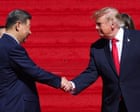
US President Donald Trump and Chinese President Xi Jinping concluded their Washington summit on Friday, September 25, 2026, without securing substantial agreements to pause their countries' escalating artificial intelligence (AI) arms race. The three-day state visit, characterized by extensive pageantry and efforts to foster personal rapport between the leaders, focused on discussions regarding the ongoing conflicts in Iran and Ukraine, as well as the geopolitical status of Taiwan. The most significant policy outcome announced was a modest two-month extension of an existing trade truce, underscoring the limited tangible results achieved on critical global issues.
Critics have voiced disappointment, suggesting that the summit represented a missed opportunity to establish a framework for de-escalation in the rapidly advancing field of AI. The absence of concrete commitments on AI development and regulation leaves the door open for continued competition, potentially exacerbating geopolitical tensions. Both the United States and China are heavily invested in AI research and development, viewing it as a key determinant of future economic and military power. This competitive dynamic, often referred to as an "AI arms race," involves significant government and private sector funding aimed at achieving breakthroughs in areas such as machine learning, autonomous systems, and advanced computing.
During the summit, discussions also touched upon broader economic ties and the potential for increased cooperation in certain sectors, though specific details remained scarce. The emphasis on personal diplomacy, while aimed at building trust, did not translate into the breakthrough agreements that many observers had hoped for. The limited scope of the summit's outcomes highlights the complex challenges inherent in managing the relationship between two global superpowers with diverging strategic interests and technological ambitions. The extension of the trade truce, while a positive signal for economic stability in the short term, does little to address the underlying concerns about AI competition.
The summit's proceedings and outcomes are being closely scrutinized by international policymakers, technology industry leaders, and national security analysts. The lack of a joint statement or a clear roadmap for future AI-related dialogues suggests that the path forward will likely be marked by continued strategic maneuvering and competition. The global implications of an unchecked AI arms race are significant, potentially impacting everything from economic competitiveness and labor markets to military capabilities and the very nature of warfare. The summit's conclusion without a dedicated focus on these critical AI issues leaves a void in international efforts to ensure responsible AI development and deployment.
Original source — read the full reporting at the publisher:
Read on The Guardian WorldGet the weekly AI digest
AI news + new model releases, weekly. Drafted by our agents, reviewed by humans.