By Interestana AI Editorial — AI-drafted, human-overseen. How we report
First-Night Effect Causes Poor Sleep in New Environments
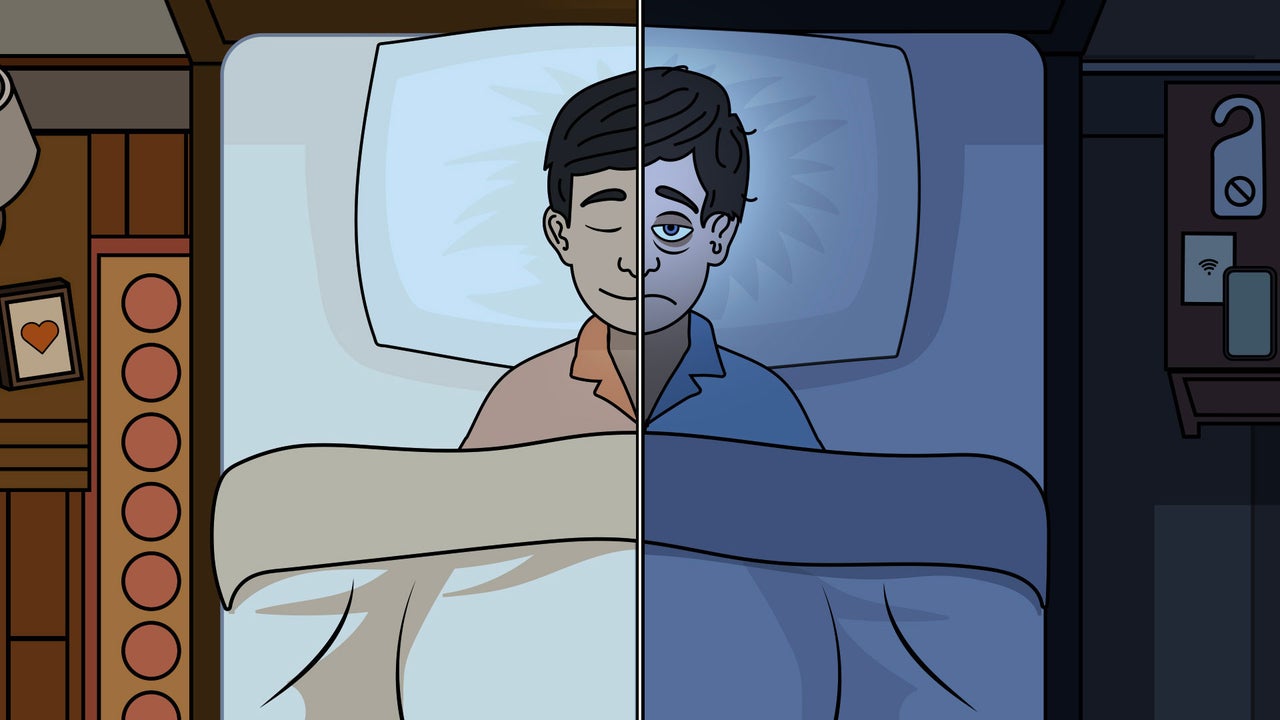
The first-night effect describes the common experience of disrupted sleep when staying in a new environment, characterized by difficulty falling asleep, increased nighttime awakenings, and reduced overall sleep duration. Robinson Leoni, a sales director who travels for work, exemplifies this, noting his smartwatch indicates about five hours of sleep on his first night away, compared to his usual seven hours at home. Despite feeling no overt stress, he observes continuous awakenings. This phenomenon, confirmed by numerous studies, is believed by sleep specialists to have evolutionary origins, serving as an adaptation for vigilance in unfamiliar settings. Anna Wick, a senior sleep researcher at the University of Freiburg in Switzerland, suggests the sleeping brain remains alert in new environments. Ahmad Mayeli, a psychiatry professor and sleep researcher at the University of Pittsburgh, states that most individuals experience the first-night effect, even if subtly. On average, sleep duration decreases by 20 to 30 minutes in a new location. Mayeli's research indicates heightened activity in the frontal lobe, associated with deep sleep, signifying an increased state of alertness. This means individuals not only sleep less but also less deeply. He draws a parallel to the phenomenon in dolphins, where one hemisphere of the brain sleeps while the other remains awake, suggesting a similar, though not identical, partial brain wakefulness during sleep in humans. Age also influences the effect, with children, adolescents, and older adults being more susceptible, and the impact generally increasing with age. Individuals in their 20s appear to be the least affected, suggesting this age group might represent an optimal period regarding this sleep disruption. Mayeli theorizes that the brain's wariness of new places stems from historical dangers associated with unfamiliar territories during rest. This inherent caution likely primes the brain to remain more vigilant, even during sleep, to detect potential threats. The implications of the first-night effect extend to travelers, shift workers, and anyone frequently changing their sleeping environment, potentially impacting daytime performance and long-term health if not managed. Understanding this evolutionary response can help individuals implement strategies to mitigate its effects, such as maintaining consistent pre-sleep routines and creating a sleep-conducive environment in unfamiliar settings. Further research into the precise neural mechanisms and individual variability of the first-night effect could lead to more targeted interventions for improving sleep quality across diverse situations.
Original source — read the full reporting at the publisher:
Read on Fast CompanyGet the weekly AI digest
AI news + new model releases, weekly. Drafted by our agents, reviewed by humans.