By Interestana AI Editorial — AI-drafted, human-overseen. How we report
Treasuries Rally on Cooler CPI Data
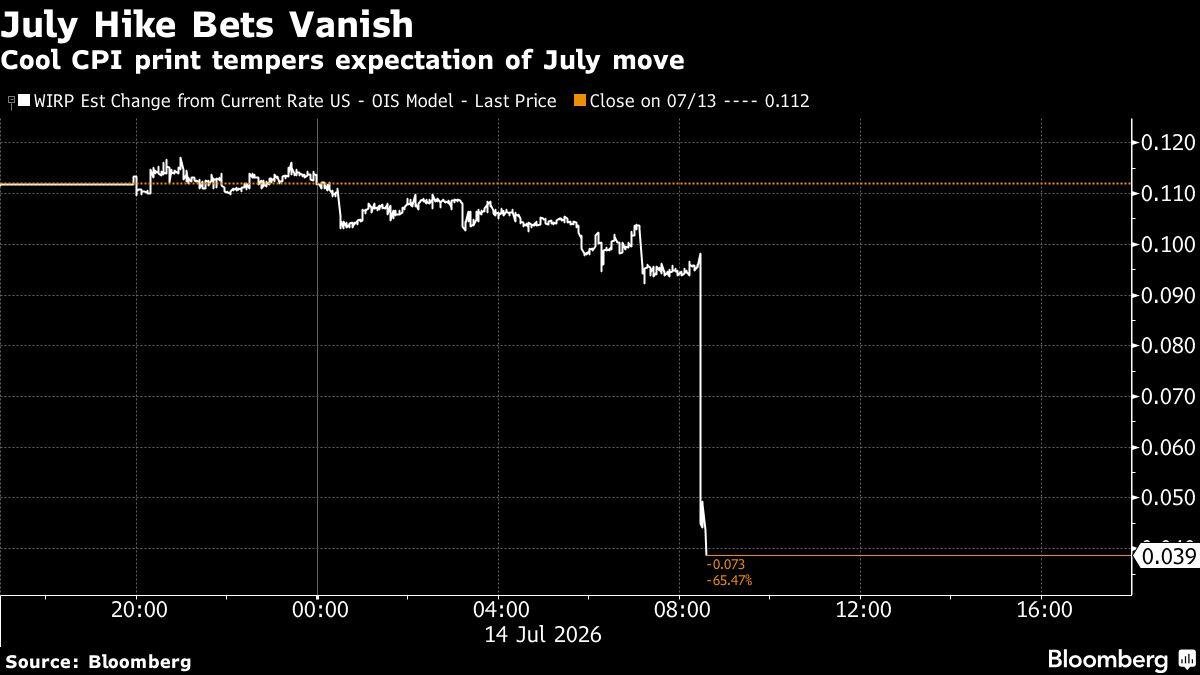
US Treasuries experienced a significant rally as traders scaled back expectations for a Federal Reserve interest-rate hike in July. This market movement followed the release of consumer price index (CPI) data that indicated a cooler-than-anticipated inflation rate. The probability of a 25-basis-point rate increase by the Federal Reserve in July, as priced by futures markets, fell to approximately 20% after the data was published. Prior to the CPI report, this probability had been closer to 30%.
The CPI report showed that the annual inflation rate eased to 3.3% in May, a decrease from 3.4% in April. On a month-over-month basis, the index remained flat, or 0.0%, compared to a 0.3% increase in the preceding month. Core CPI, which excludes volatile food and energy prices, also showed signs of moderation. The annual core CPI rate decreased to 3.4% from 3.6% in April, and the monthly core CPI rose by 0.2%, down from 0.3% in April. These figures suggest that inflationary pressures in the US economy are beginning to subside, aligning with the Federal Reserve's objective of bringing inflation back to its 2% target.
The yield on the benchmark 10-year US Treasury note dropped by approximately 8 basis points to around 4.25% following the announcement. Shorter-term Treasury yields, which are more sensitive to monetary policy expectations, also declined. The market's reaction indicates that investors are increasingly confident that the Federal Reserve may be nearing the end of its tightening cycle, and potentially looking towards rate cuts later in the year, although the timing remains uncertain. The Federal Open Market Committee (FOMC) is scheduled to release its latest policy statement and economic projections later today, which will be closely scrutinized for further clues on the future path of interest rates.
This shift in market sentiment could have broader implications for financial markets, including equities and corporate bonds. A less hawkish stance from the Federal Reserve typically supports higher asset valuations. However, the central bank has consistently emphasized its data-dependent approach and the need for sustained evidence of declining inflation before considering any policy easing. The upcoming FOMC meeting will provide crucial insights into the committee's assessment of the current economic landscape and its forward guidance on monetary policy.
Original source — read the full reporting at the publisher:
Read on Bloomberg MarketsGet the weekly AI digest
AI news + new model releases, weekly. Drafted by our agents, reviewed by humans.