By Interestana AI Editorial — AI-drafted, human-overseen. How we report
Toyota Trains Workers to Operate 400,000 Factory Robots
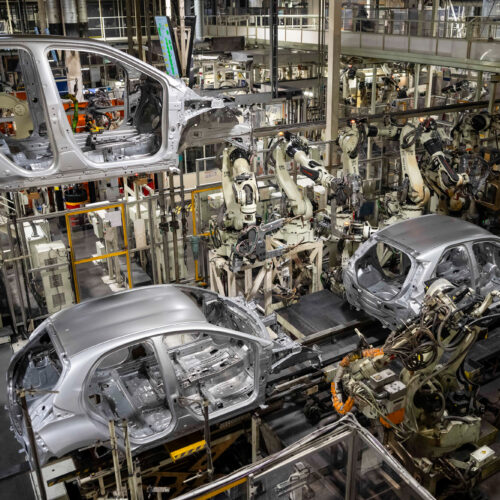
Toyota Motor group is actively training its human workforce to operate an extensive fleet of 400,000 factory robots, a significant initiative aimed at modernizing its automotive production facilities. This ambitious plan, detailed by Nikkei Asia, involves an annual investment of $6.42 billion starting in 2028, dedicated to upgrading factories with this new robotic workforce. The company intends to integrate 150,000 robots within its own automotive plants and an additional 250,000 robots across its group company facilities, which are responsible for producing a wide array of components and materials essential to vehicle manufacturing. This strategic deployment underscores Toyota's commitment to leveraging advanced automation to enhance efficiency and production capabilities across its global operations.
As part of this transition, Toyota has already initiated the deployment of its ELEY humanoid robots on assembly lines. These robots are designed to learn and adapt by observing and interacting with human workers. The training process involves human employees teaching the robots specific tasks that require intricate hand movements. This is achieved through the use of specialized "jigs" that are designed to mimic the dexterity and precision of human fingers, allowing the robots to develop the necessary motor skills. The robots, which move on wheels, are being programmed to replicate complex assembly line procedures, indicating a collaborative approach between humans and machines in the manufacturing environment.
Despite the substantial investment in robotics and the large-scale deployment of automated systems, a Toyota executive has clarified that this robotic push is not intended as a direct replacement for human employees. The emphasis appears to be on augmenting human capabilities and improving overall productivity rather than reducing the human workforce. This approach suggests a strategy of human-robot collaboration, where robots handle repetitive or physically demanding tasks, while human workers focus on oversight, complex problem-solving, and quality control. The integration of robots is framed as an upgrade to factory infrastructure, enabling workers to adapt to new technologies and potentially take on more skilled roles within the evolving manufacturing landscape.
The scale of Toyota's robotic ambition is notable, positioning the company at the forefront of automation in the automotive sector. The annual investment of $6.42 billion highlights the significant financial commitment required to achieve such a widespread integration of advanced robotics. By 2028, the target of 400,000 robots across its facilities signifies a fundamental shift in manufacturing operations. The training program for workers is a critical component of this strategy, ensuring that the human element remains integral to the success of the automated production lines. This initiative reflects a broader trend in the industry towards smart factories and Industry 4.0 principles, where technology and human expertise converge to create more efficient, flexible, and resilient manufacturing systems.
Original source — read the full reporting at the publisher:
Read on Ars TechnicaGet the weekly AI digest
AI news + new model releases, weekly. Drafted by our agents, reviewed by humans.