By Interestana AI Editorial — AI-drafted, human-overseen. How we report
Tiny Fiber-Optic Plug Promises to Make Laser Weapons Battlefield-Ready
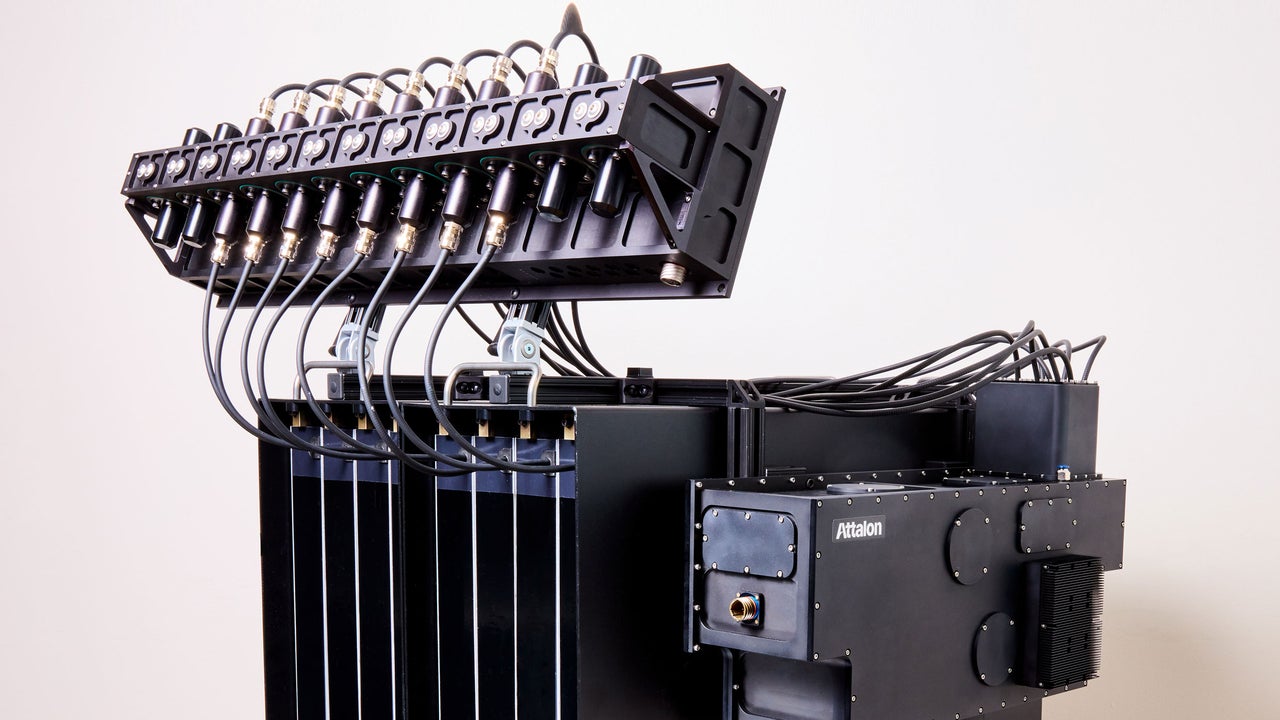
Defense technology company Attalon, a recent spin-off from Coherent's defense business formed earlier this year, has announced a significant advancement in the practical deployment of high-energy laser weapons. On July 23, the company revealed the first shipment of its Kilowatt Interconnect (kWIC) Disconnect subsystem. This seemingly small component is poised to address a critical bottleneck in fielding these advanced military systems at scale by dramatically simplifying the repair process for laser amplifiers, a crucial element of any laser weapon.
Historically, maintaining and repairing the fiber-optic connections within laser amplifiers has been a complex, time-consuming, and highly specialized task. It traditionally required delicate fiber-optic splicing, a procedure demanding extensive training, specialized tools, and significant time. This process was deemed impractical for the fast-paced and often perilous environment of a modern battlefield, where U.S. service members might face immediate threats like hostile drones and require rapid system restoration. The previous method could take days to complete, leading to prolonged system downtime and reduced operational readiness.
The kWIC Disconnect subsystem fundamentally changes this paradigm. It functions as a robust, plug-and-play connector that effectively replaces the need for intricate fiber-optic splicing. Instead of requiring technicians to meticulously fuse broken fiber cables, an operator can now simply disconnect a faulty or damaged laser amplifier and swiftly swap it with a new, pre-tested unit. This modular approach promises to slash repair times from potentially days down to mere minutes, ensuring that laser weapons can be returned to operational status with unprecedented speed.
Beyond the immediate benefit of reduced downtime, the kWIC Disconnect subsystem represents a significant conceptual shift. It effectively transforms a highly sophisticated and previously intricate laser amplifier into a Line-Replaceable Unit (LRU). The LRU concept has been a foundational principle within the American defense industrial base since the 1950s. It was initially adopted by the U.S. Air Force to enhance aircraft maintainability on the flight line. By standardizing modular, self-contained electronic components, ground crews could minimize aircraft downtime and sustain high operational tempos, even as aircraft grew increasingly complex. Attalon's application of this established LRU principle to laser weapon components is a major stride toward making these advanced systems truly fieldable at a large scale by the U.S. military. While diode pumps, gain mediums, beam directors, and power sources are all vital, the ability to rapidly maintain and repair these complex systems, as facilitated by the kWIC Disconnect, is being recognized by some experts as the most critical factor for their widespread adoption and battlefield effectiveness.
Original source — read the full reporting at the publisher:
Read on Fast CompanyGet the weekly AI digest
AI news + new model releases, weekly. Drafted by our agents, reviewed by humans.