By Interestana AI Editorial — AI-drafted, human-overseen. How we report
Go To Green System Uses Color-Coded Lights for Real-Time Evacuation Guidance During School Emergencies
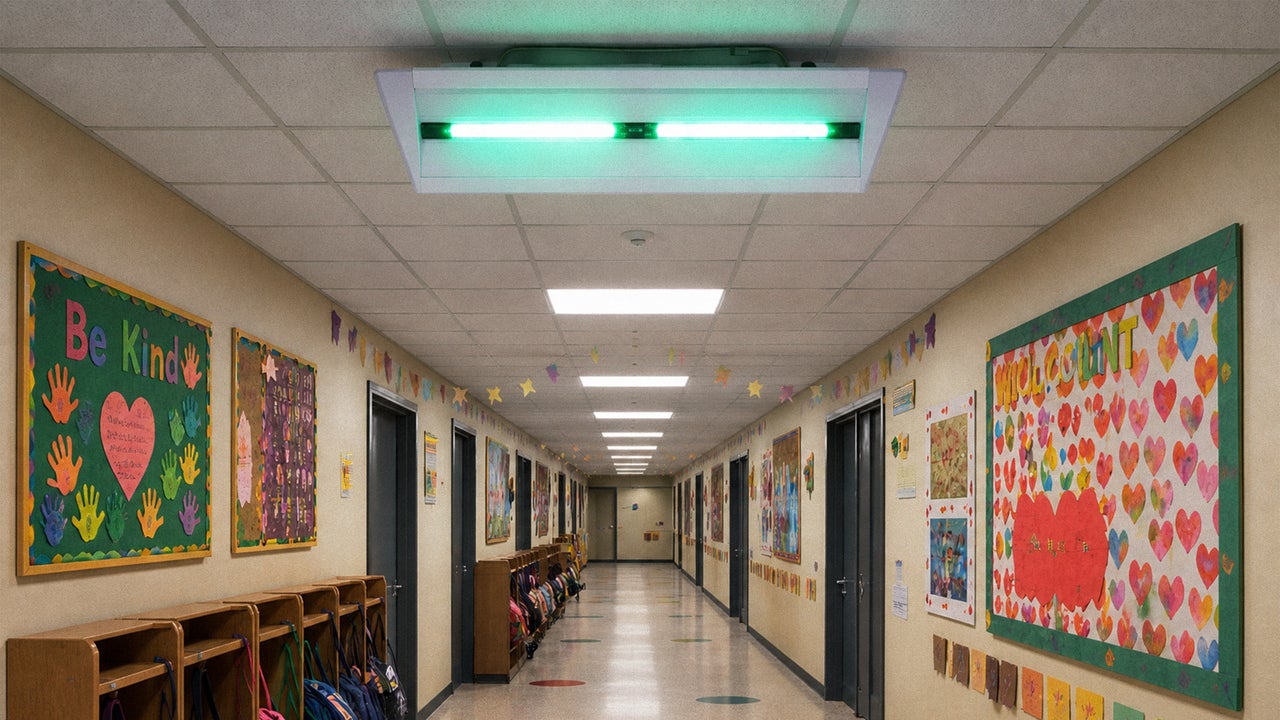
In critical emergency situations, such as active shooter events, fires, or natural disasters, effective and rapid evacuation is paramount to ensuring the safety of building occupants. Recognizing this vital need, Go To Green has developed an innovative emergency evacuation system designed to automatically guide individuals to the safest locations within a building, or instruct them to shelter in place. The system's primary focus is on enhancing security within educational institutions, particularly in response to the persistent threat of active shooter incidents.
Go To Green leverages a simple yet highly intuitive color-coded light system, drawing inspiration from the universally recognized children's game "red light, green light." Ernie Williams, the founder of Go To Green, a former Marine with 25 years of military service, conceived the system based on his direct experiences with the limitations of existing indoor security systems, particularly in real-time active shooter scenarios. Williams noted that the inherent familiarity of the "red light, green light" game from childhood provides a preconditioned understanding, making the system easily comprehensible for individuals of all ages, including young students.
The Go To Green system is comprised of discreet, thin LED light arrays that are mounted on ceilings throughout school buildings. These are integrated with a network of audio and motion sensors strategically positioned in hallways, as well as on the interior and exterior of classroom doors. These sensors are engineered to activate upon detecting specific auditory cues, such as the sound of gunshots, or environmental indicators like the presence of fire. Once activated, the system employs green lights to clearly indicate safe pathways for evacuation, directing people away from immediate danger. Conversely, red lights are illuminated to signify areas that should be avoided due to the proximity of a threat or hazard. In instances where the emergency source is identified, such as a shooter or a fire, flashing red and blue lights are activated at the point nearest to the incident, providing immediate localized alerts.
This sophisticated system effectively transforms the building itself into a dynamic, real-time evacuation tool. It offers a highly visual and unambiguous method for guiding occupants through complex and rapidly evolving emergency situations. A key differentiator for Go To Green, as highlighted by Williams, is its ability to overcome the shortcomings of traditional indoor security systems, which often struggle to detect and respond to active shooters in real-time. The Go To Green system's independent sensors are designed to precisely pinpoint the location of a threat, even if the threat is mobile. For example, if an active shooter moves through a hallway and discharges a weapon, the sensors will detect this change, and the system will dynamically adjust the illuminated pathways to reflect the new threat location. This adaptive capability ensures that the evacuation guidance remains current and relevant to the evolving threat landscape, thereby maximizing the potential for a swift and safe egress or shelter-in-place maneuver.
Original source — read the full reporting at the publisher:
Read on Fast CompanyGet the weekly AI digest
AI news + new model releases, weekly. Drafted by our agents, reviewed by humans.