By Interestana AI Editorial — AI-drafted, human-overseen. How we report
Northrop Grumman Launches Advanced Robotic Servicing Satellite
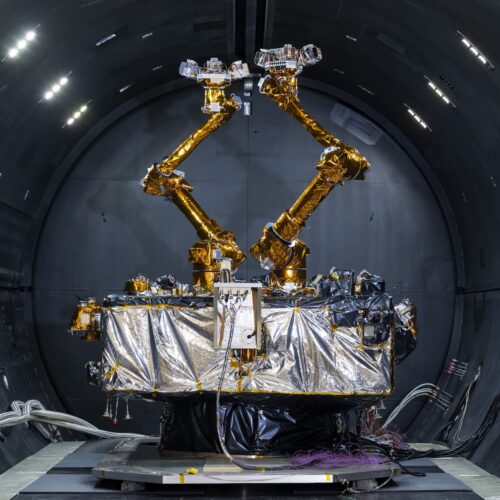
Northrop Grumman's Mission Robotic Vehicle (MRV) launched into geosynchronous orbit this week aboard a SpaceX Falcon 9 rocket, initiating a decade-long mission focused on satellite servicing. The MRV, designed and constructed by Northrop Grumman, lifted off from Cape Canaveral Space Force Station in Florida on Tuesday. Accompanying the MRV were three Mission Extension Pods (MEPs), each operating as an independent spacecraft. All four payloads were successfully deployed by the Falcon 9 rocket approximately one hour after liftoff.
The MRV and its accompanying MEPs are scheduled to spend about a year maneuvering from their initial elliptical orbit to a circular orbit situated over 22,000 miles (approximately 36,000 kilometers) above the equator. This geosynchronous orbit aligns with the orbital paths of many civilian and military communications satellites, missile warning systems, and an increasing number of reconnaissance satellites. At this altitude, the MRV will maintain a synchronized pace with Earth's rotation, enabling its advanced servicing capabilities.
The MRV is distinguished by its two flexible robotic arms, which are intended to perform complex tasks such as refueling, repairing, and repositioning other satellites. This capability aims to extend the operational lifespan of valuable space assets and reduce the accumulation of orbital debris. The mission represents a significant step forward in the development of on-orbit servicing technologies, potentially transforming how satellite infrastructure is managed and maintained in the future.
Original source — read the full reporting at the publisher:
Read on Ars TechnicaGet the weekly AI digest
AI news + new model releases, weekly. Drafted by our agents, reviewed by humans.