By Interestana AI Editorial — AI-drafted, human-overseen. How we report
Algae-Powered Battery Emerges as a Greener Alternative
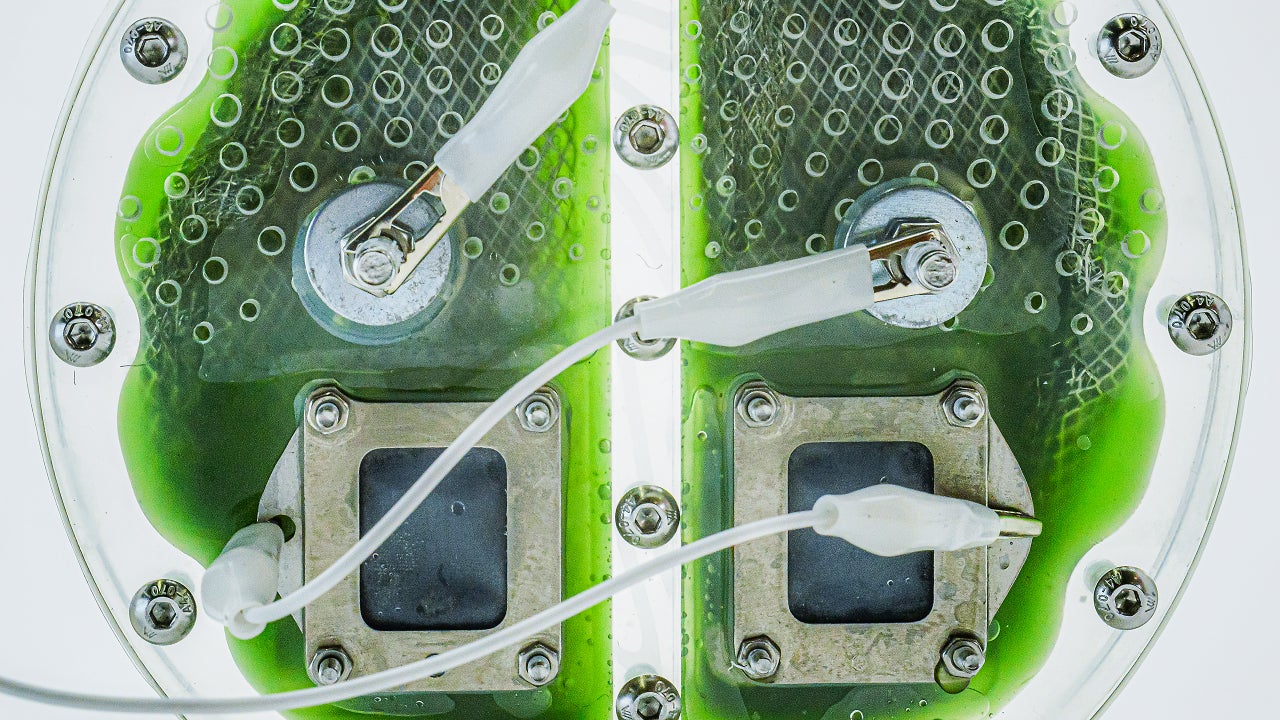
Bio-designer Lucia Giron has spearheaded the development of a novel algae-powered battery, presenting a promising, environmentally conscious alternative to traditional alkaline batteries. The genesis of this innovative project traces back to a vivid childhood experience during a family vacation off the coast of North Carolina. A tropical storm had inundated the shoreline, leaving behind shallow pools of water that, when disturbed at night, emitted a captivating glow. Giron recalls this natural spectacle, attributing the bioluminescence to specific bacteria in the water, and describes it as a moment of profound awe at a natural phenomenon. This early encounter ignited a lasting fascination with the interplay between design and biology, a field Giron was studying at the time.
The resulting algae battery is a striking fusion of biology and engineering. Its design features a transparent acrylic chamber, housing aquatic cyanobacteria, often referred to as blue-green algae. This chamber is then encased within a sleek metal frame, creating a compact device that fits comfortably in the palm of a hand. The transparent nature of the chamber is crucial, allowing ample sunlight to penetrate for the cyanobacteria to perform photosynthesis, the biological process that converts light energy into chemical energy. Furthermore, this transparency enables users to visually monitor the ongoing biological activity within the battery. The current iteration of this bio-battery has demonstrated its capability to power small electronic devices, specifically a digital clock and a temperature sensor.
The foundational research for this algae battery originated within Cambridge University, spearheaded by Dr. Paolo Bombelli. Dr. Bombelli, a researcher specializing in biophotovoltaics, was collaborating with Professor Chris Howe on this emerging green technology. Biophotovoltaics focuses on harnessing electrical energy directly from the process of photosynthesis. Prior to Giron's involvement, Bombelli and Howe had already established a functional prototype of the battery, though its aesthetic and form factor were rudimentary, resembling laboratory test tubes. To transform this scientific concept into a more aesthetically appealing and user-friendly consumer product, they enlisted the expertise of Lucia Giron for her design sensibilities and Lifu Tan, an electrical engineer, to refine the technical aspects. The collective aim of this multidisciplinary team is to explore the broader potential of biophotovoltaics as a sustainable energy source, moving beyond its current application in powering low-power devices and potentially offering a more eco-friendly solution for energy needs, thereby reducing reliance on non-renewable resources and mitigating the environmental impact of conventional battery production and disposal.
Original source — read the full reporting at the publisher:
Read on Fast CompanyGet the weekly AI digest
AI news + new model releases, weekly. Drafted by our agents, reviewed by humans.