By Interestana AI Editorial — AI-drafted, human-overseen. How we report
AI Brain Implant Decodes Speech and Gestures Simultaneously
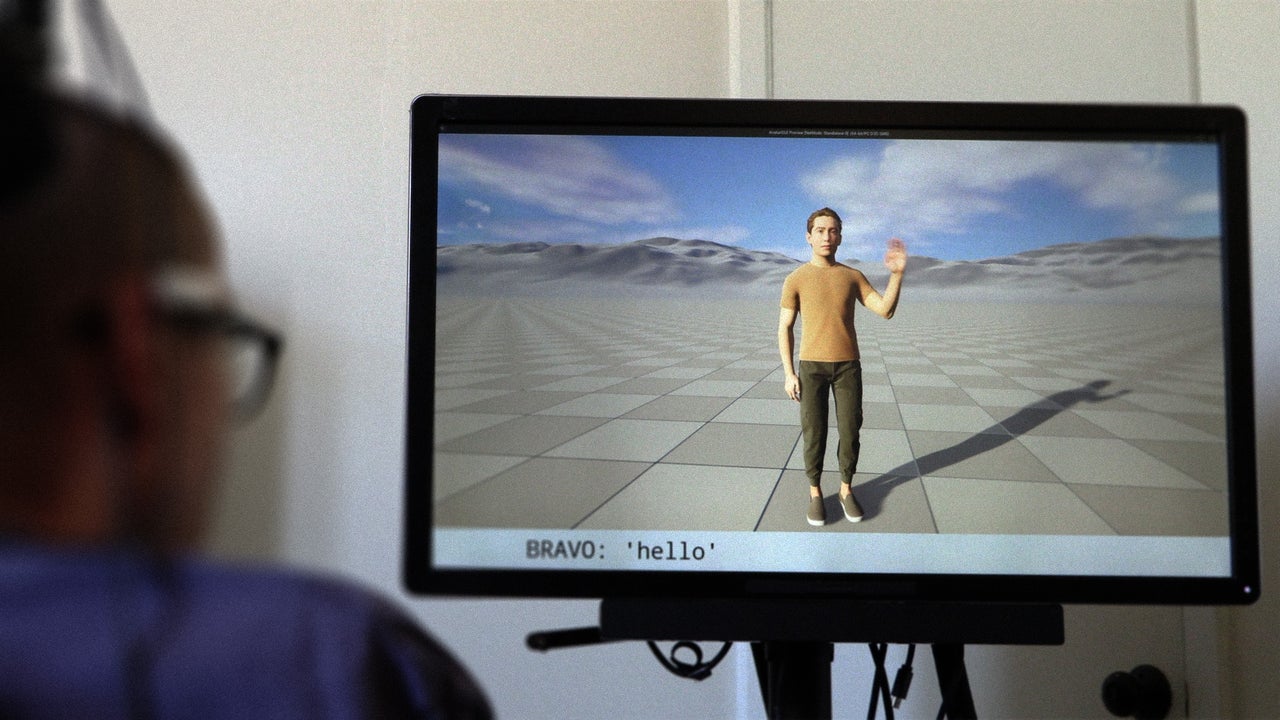
Scientists have developed a novel brain-computer interface (BCI) capable of simultaneously decoding a paralyzed individual's attempts to speak and gesture, translating these impulses into text and the movements of a digital avatar. This breakthrough, detailed in a research paper published in Nature, marks a significant advancement over existing BCIs, which can typically decode either speech or gestures reliably, but not both concurrently. The challenge in decoding both simultaneously arises from the partial overlap in brain areas responsible for verbal communication and accompanying bodily movements, such as hand gestures. Researchers from the University of California, San Francisco (UCSF) have demonstrated that their new AI-driven system can effectively process and interpret speech and gesture signals together. Currently, the system is limited to decoding small vocabularies and can handle only two participants for simultaneous decoding, with imperfect accuracy. Despite these limitations, this development represents a substantial step forward, acknowledging that human communication is a complex interplay of language and non-verbal cues, including hand movements and facial expressions, which are crucial for social interaction. The research team envisions this technology as a foundational step towards a "whole-body BCI." Samantha Brosler, a lead author of the study and a researcher in the UC Berkeley–UCSF graduate program in bioengineering, stated that the long-term objective is to create a single brain interface that can restore multiple forms of communication and movement for individuals with paralysis. In principle, the decoded speech and movement signals could be utilized to control a virtual avatar, other assistive technologies, or even a physical robotic surrogate, thereby offering greater flexibility and richer interaction with the world. This advancement could fundamentally alter how individuals with severe motor impairments engage with their environment and express themselves, moving beyond purely text-based or single-modality communication systems. The integration of AI models is central to the system's ability to interpret the complex neural signals associated with simultaneous speech and motor intentions. The research highlights the potential for BCIs to not only restore lost function but also to enhance human capabilities by bridging the gap between thought and action across multiple communication channels.
Original source — read the full reporting at the publisher:
Read on Fast CompanyGet the weekly AI digest
AI news + new model releases, weekly. Drafted by our agents, reviewed by humans.