By Interestana AI Editorial — AI-drafted, human-overseen. How we report
Testosterone May Not Boost Confidence, Study Finds
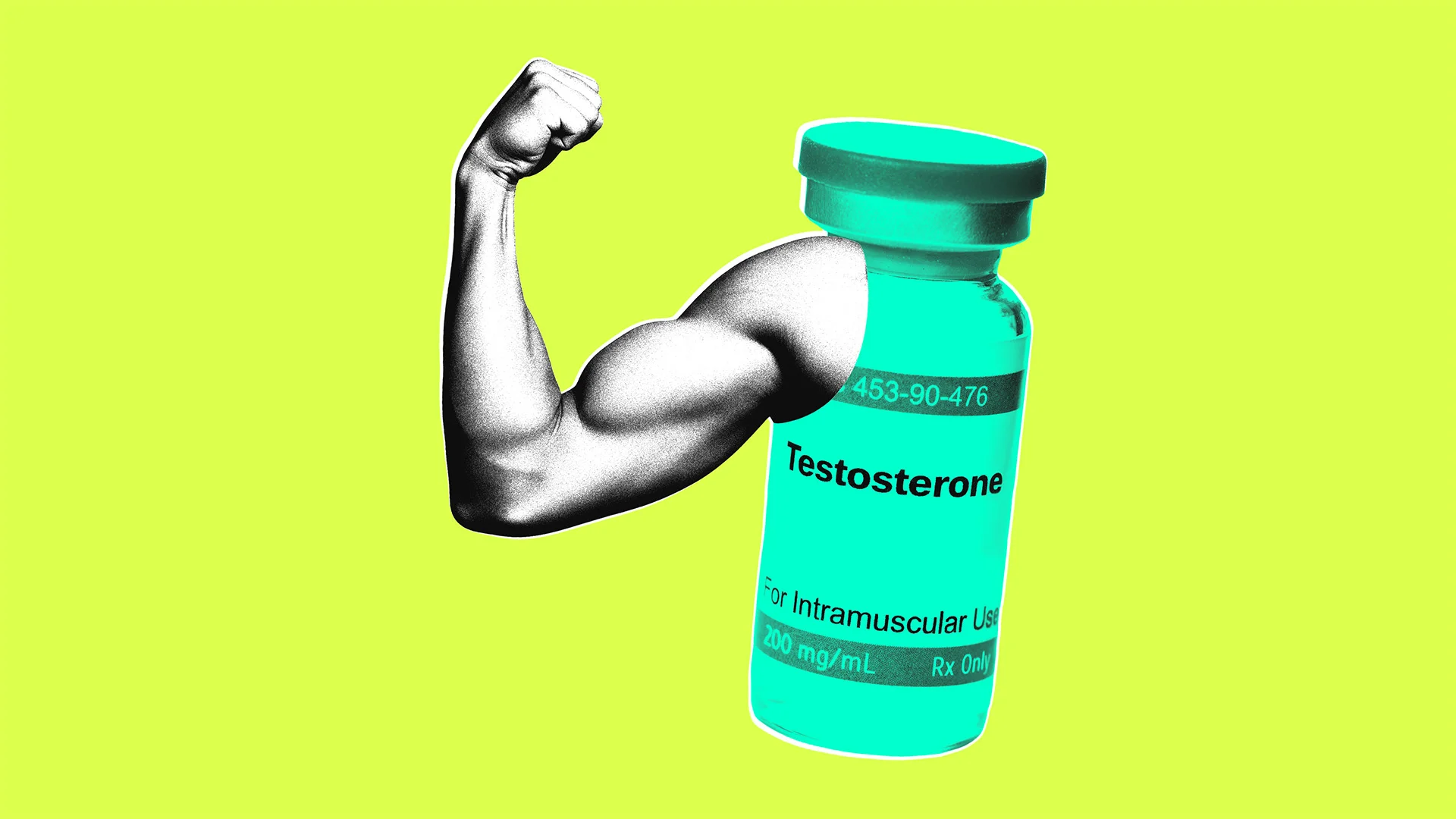
A comprehensive study involving a large cohort of male participants has yielded findings that challenge the widely accepted notion that higher testosterone levels directly correlate with increased confidence. The research, conducted by a collaborative team of scientists with initially divergent hypotheses, employed a rigorous experimental design to investigate the intricate relationship between this key hormone and self-assurance. The results, published in a peer-reviewed journal, indicate that the direct causal link between testosterone and confidence, often assumed in both popular culture and some scientific circles, is not as straightforward as previously believed.
Historically, testosterone has been associated with traits such as dominance, assertiveness, and risk-taking, all of which can be perceived as manifestations of confidence. This association has led to a general assumption that administering or naturally boosting testosterone would invariably lead to a more confident demeanor in men. However, this new research utilized a placebo-controlled, double-blind methodology, considered the gold standard in clinical trials, to isolate the effects of testosterone. Participants were randomly assigned to receive either a testosterone supplement or a placebo, and neither the participants nor the researchers administering the tests knew who was receiving which treatment until the study's conclusion. This approach minimizes bias and ensures that observed effects are attributable to the treatment itself.
The experiment involved a significant number of participants, though the exact number was not specified in the initial report, and measured various psychological and behavioral indicators of confidence. These included self-reported confidence levels, performance in tasks designed to elicit confidence or uncertainty, and observed social behaviors. The data collected revealed that while there might be subtle or indirect effects, the direct and robust boost in confidence that was anticipated did not materialize across the participant group. Instead, the study suggests that other psychological factors, social context, and individual baseline characteristics play a more significant role in determining a man's confidence levels than testosterone alone.
This groundbreaking study opens new avenues for research into the neurobiology and psychology of confidence. It prompts a re-evaluation of how we understand hormonal influences on human behavior and cognition. Future investigations may focus on identifying the specific mediating factors that influence the testosterone-confidence relationship, exploring potential interactions with other hormones or neurotransmitters, and examining how different social environments might modulate any existing effects. The findings underscore the complexity of human psychology and the need for nuanced, evidence-based understanding rather than relying on oversimplified assumptions about biological drivers of behavior. The research team emphasized that while this study provides significant new insights, further replication and exploration are necessary to fully elucidate the multifaceted interplay between testosterone and confidence.
Original source — read the full reporting at the publisher:
Read on Inc.Get the weekly AI digest
AI news + new model releases, weekly. Drafted by our agents, reviewed by humans.