By Interestana AI Editorial — AI-drafted, human-overseen. How we report
Jensen Huang Calls AI Doomsday Narratives Irresponsible
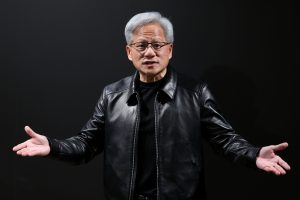
Nvidia CEO Jensen Huang has publicly rejected the "doomsday narratives" surrounding artificial intelligence, deeming them "irresponsible" and not grounded in scientific reality. In a "CBS Sunday" interview, Huang asserted that predictions of AI leading to the "end of the world" by 2030 are unfounded, stating there is a "0% chance" of such an outcome. While acknowledging the legitimacy of AI safety concerns, he criticized the dire public warnings issued by some industry leaders, arguing that "scaring people is unnecessary." Huang suggested that AI companies should instead focus their engineering resources on developing safety and verification measures. As the CEO of Nvidia, a company that supplies the foundational chips powering the AI industry's rapid expansion, Huang's perspective carries significant weight.
Huang expressed skepticism regarding the motives of those promoting extreme AI catastrophe scenarios. "I believe the claims of the end of the world, stirring fear across America, and doing it by the people who are doing it makes no sense to me, so they must be doing it for ulterior reasons," he stated. He characterized such fear-mongering as irresponsible and questioned the underlying motivations of its proponents. This stance emerges amidst a broader discourse on AI governance, with former President Donald Trump also recently commenting on the matter. Trump rejected calls for increased AI regulation, asserting that existing legal frameworks are sufficient to address AI-related concerns. He announced plans to establish an "AI Force," mirroring the structure of Space Force, and to appoint an "AI czar," though specific timelines and individuals were not disclosed. Trump emphasized the strategic importance of AI leadership, posting on Truth Social, "Whoever wins AI, WINS," and highlighting the United States' current lead over China.
Huang also advocated for continued, rapid AI development, cautioning against stifling progress due to fears of AI takeover. He emphasized that safety must be a paramount consideration, stating, "If we're compromising safety, that can't happen." His philosophy centers on advancing AI "as fast as we can, but not faster than we should." This measured approach suggests a belief that technological progress and robust safety protocols can and must advance in tandem. The core of Huang's argument rests on the principle that AI development should proceed with a focus on practical engineering solutions for safety and verification, rather than succumbing to speculative, fear-driven rhetoric. He believes that the industry's energy is better spent on building secure and reliable AI systems than on generating public anxiety about hypothetical future risks. The implications of Huang's statements could influence public perception and policy discussions regarding AI development and regulation, potentially shifting the focus from existential threats to more immediate engineering challenges.
Original source — read the full reporting at the publisher:
Read on FortuneGet the weekly AI digest
AI news + new model releases, weekly. Drafted by our agents, reviewed by humans.