By Interestana AI Editorial — AI-drafted, human-overseen. How we report
No-Tie Dice Set Solves Game Tie-Breaking Problem
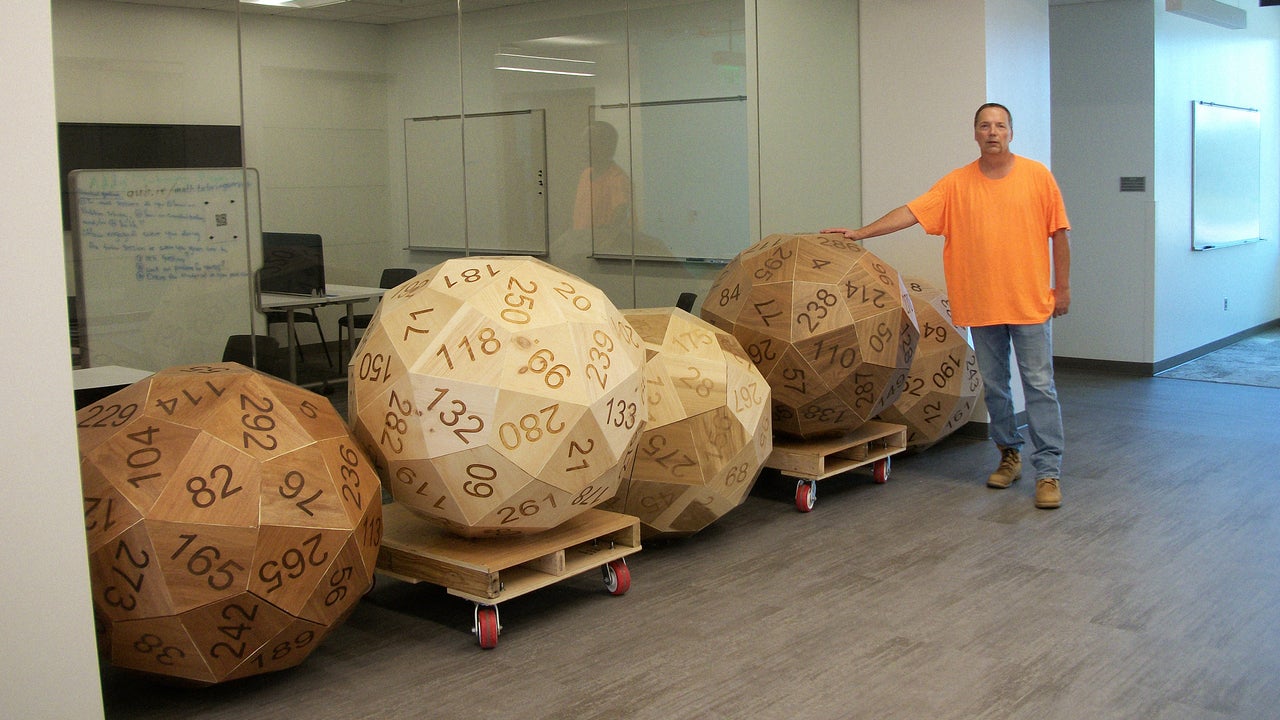
Eric Harshbarger, a senior lecturer at Auburn University’s College of Sciences and Mathematics, alongside a team of mathematicians and computer scientists, has developed a set of five 60-sided dice designed to eliminate ties when determining the first player in a game. This innovative solution, known as the Go First Dice, ensures that each player has a mathematically equal chance of rolling the highest number, thereby resolving a common frustration in board games where standard dice can result in identical rolls. The development process spanned over a decade, involving numerous iterations to meet the stringent parameters of fairness and non-tie outcomes.
The Go First Dice feature numbers ranging from 1 through 300 spread across their 60 faces. The concept originated from a conversation Harshbarger had with James Ernest, founder of Cheapass Games, at a gaming convention in 2010. Ernest posed the question of whether no-tie dice were possible, which Harshbarger found to be a compelling mathematical challenge. Initially, Harshbarger collaborated with mathematician Robert Ford, and they devised a solution using four 12-sided dice, with numbers from 1 to 48. However, the subsequent challenge was to achieve the same no-tie outcome with a set of five dice, a more complex mathematical undertaking.
These unique dice are now immortalized in a sculpture at Auburn University’s new STEM + Agricultural Sciences Complex. The sculpture itself is crafted from various types of wood, including pine, poplar, red oak, walnut, and mahogany. Each individual wooden die in the sculpture weighs over 100 pounds and measures approximately three-and-a-half feet in diameter, showcasing the physical manifestation of the complex mathematical solution. The creation of these dice highlights the intersection of game design, mathematics, and art, demonstrating how abstract problems can lead to tangible and functional innovations.
While simpler methods exist for deciding who goes first in games, Harshbarger was drawn to the intricate mathematics underlying the no-tie dice problem. The quest for a set of 'Go First Dice' became a significant research endeavor, pushing the boundaries of combinatorial mathematics and probability. The successful development of the five 60-sided dice represents a significant achievement in game theory and probability, offering a definitive solution to a long-standing issue in game mechanics and ensuring a fair start for all participants.
Original source — read the full reporting at the publisher:
Read on Fast CompanyGet the weekly AI digest
AI news + new model releases, weekly. Drafted by our agents, reviewed by humans.