By Interestana AI Editorial — AI-drafted, human-overseen. How we report
AI Strategist: Multiple 'Rolling' Bubbles, Not One
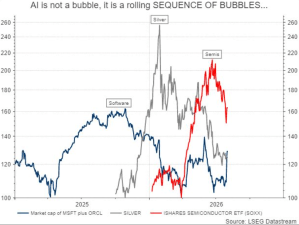
Dhaval Joshi, formerly the chief strategist for Counterpoint at BCA Research, posits that the prevailing question of whether Artificial Intelligence (AI) represents a singular bubble is misframed. Instead, Joshi proposes that the AI landscape is characterized by a "rolling sequence of bubbles," where multiple bubbles inflate and deflate rapidly in succession. This perspective challenges the traditional notion of a single, large bubble building to an eventual, dramatic implosion. Joshi suggests that investors are repeatedly misjudging which entities or technologies will ultimately capture the value generated by AI advancements, leading to cycles of overvaluation and subsequent correction.
Joshi's analysis, shared on LinkedIn, draws parallels to historical speculative manias, though he differentiates the AI phenomenon. He points to the "SaaSpocalypse" in the software-as-a-service (SaaS) sector and volatility in silver and semiconductor stocks as examples of this rolling bubble effect. For instance, software stocks initially surged on the expectation that AI would enhance productivity. However, this rally reversed as investors began to recognize that AI agents could potentially disrupt the established SaaS subscription model, leading to a "software boom turned to bust." Similarly, silver prices experienced a significant spike due to its perceived utility as an electrical conductor for data centers. Yet, Joshi argues that a reassessment revealed this demand could not justify the near tripling of silver's price, especially considering the availability of other effective conductors.
The semiconductor industry also illustrates this pattern. Chipmakers' stocks initially soared on the assumption of their "limitless pricing power." Joshi, however, contends that investors are now realizing that these chip manufacturers may not possess durable "moats" around their profit margins. He anticipates that the current "astronomical margins" are likely to decline significantly as market realities set in. This rolling sequence of speculative bursts and corrections across different segments of the AI ecosystem suggests a more complex and dynamic market environment than a single, monolithic bubble.
Joshi's contrarian view emphasizes a structurally minded approach to understanding AI's economic impact. By dissecting the market's reactions to different AI-related technologies and applications, he aims to provide a more nuanced framework for investors. The concept of "rolling bubbles" implies that while individual sectors might experience sharp downturns, the overall AI revolution continues to evolve, creating new opportunities and subsequent speculative cycles. This ongoing process of market repricing and reassessment is central to Joshi's thesis, suggesting that the AI narrative is one of continuous, albeit volatile, value discovery and reallocation.
Original source — read the full reporting at the publisher:
Read on FortuneGet the weekly AI digest
AI news + new model releases, weekly. Drafted by our agents, reviewed by humans.