By Interestana AI Editorial — AI-drafted, human-overseen. How we report
The Watergate Caper: Richard Nixon and the Death of the American Dream review – political scandal, 70s style
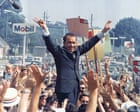
Shane O’Sullivan’s documentary, "The Watergate Caper: Richard Nixon and the Death of the American Dream," offers a compelling examination of the seismic political scandal that defined the early 1970s in the United States. The film, directed by the Irish-born, London-based filmmaker Shane O’Sullivan, meticulously reconstructs the events of Watergate through a dynamic interplay of archival footage and carefully selected cinematic excerpts. O’Sullivan, whose previous work consistently demonstrates a deep engagement with pivotal moments of political upheaval and counterculture from the late 1960s and 1970s, brings his characteristic thematic focus to this subject. His prior projects include a book and film dedicated to the assassination of Robert Kennedy, a critically acclaimed documentary titled "Children of the Revolution" that explored the leadership of radical groups like the Baader-Meinhof Group and the Japanese Red Army, and a film examining the life of Lee Harvey Oswald. In "The Watergate Caper," O’Sullivan synthesizes a vast repository of historical clips with snippets from both films produced during the Watergate era and more contemporary cinematic interpretations. This rich tapestry of visual material is unified by the distinctive, deadpan narration of veteran actor and comedian Harry Shearer, known for his work on "The Simpsons" and his collaborations with Christopher Guest. To imbue the historical narrative with a sense of immediacy and contemporary relevance, O’Sullivan strategically incorporates scenes from recent films that engage with the Watergate period. These include a memorable portrayal of a teenager fixated on the Watergate hearings in Ang Lee’s 1997 film "The Ice Storm," a darkly comedic depiction of the ineptitude of the Watergate burglars in the 1999 spoof "Dick," and Shea Whigham’s sharp portrayal of the infamous break-in mastermind G. Gordon Liddy in the recent television miniseries "Gaslit." These performed moments from later productions are artfully juxtaposed with clips from films made closer to the actual events, such as Haskell Wexler’s "Medium Cool," Alan J. Pakula’s "All the President’s Men"—a seminal dramatization of the investigative journalism that exposed the scandal—and Martin Scorsese’s "Taxi Driver," a film that captured the pervasive sense of disillusionment and urban decay in the post-Watergate America. The documentary’s ambitious approach aims to not only recount the factual progression of the Watergate crime and its subsequent scandal but also to explore its profound cultural resonance and its impact on the very notion of the American Dream. By blending historical documentation with cinematic interpretations, O’Sullivan effectively captures the complex atmosphere of the 1970s political climate and the enduring legacy of this pivotal moment in U.S. history, presenting it in a visually engaging and narratively compelling format that underscores its continued relevance.
Original source — read the full reporting at the publisher:
Read on The Guardian CultureGet the weekly AI digest
AI news + new model releases, weekly. Drafted by our agents, reviewed by humans.