By Interestana AI Editorial — AI-drafted, human-overseen. How we report
Bond Volatility Index Rises While Stocks, Bitcoin Remain Unmoved
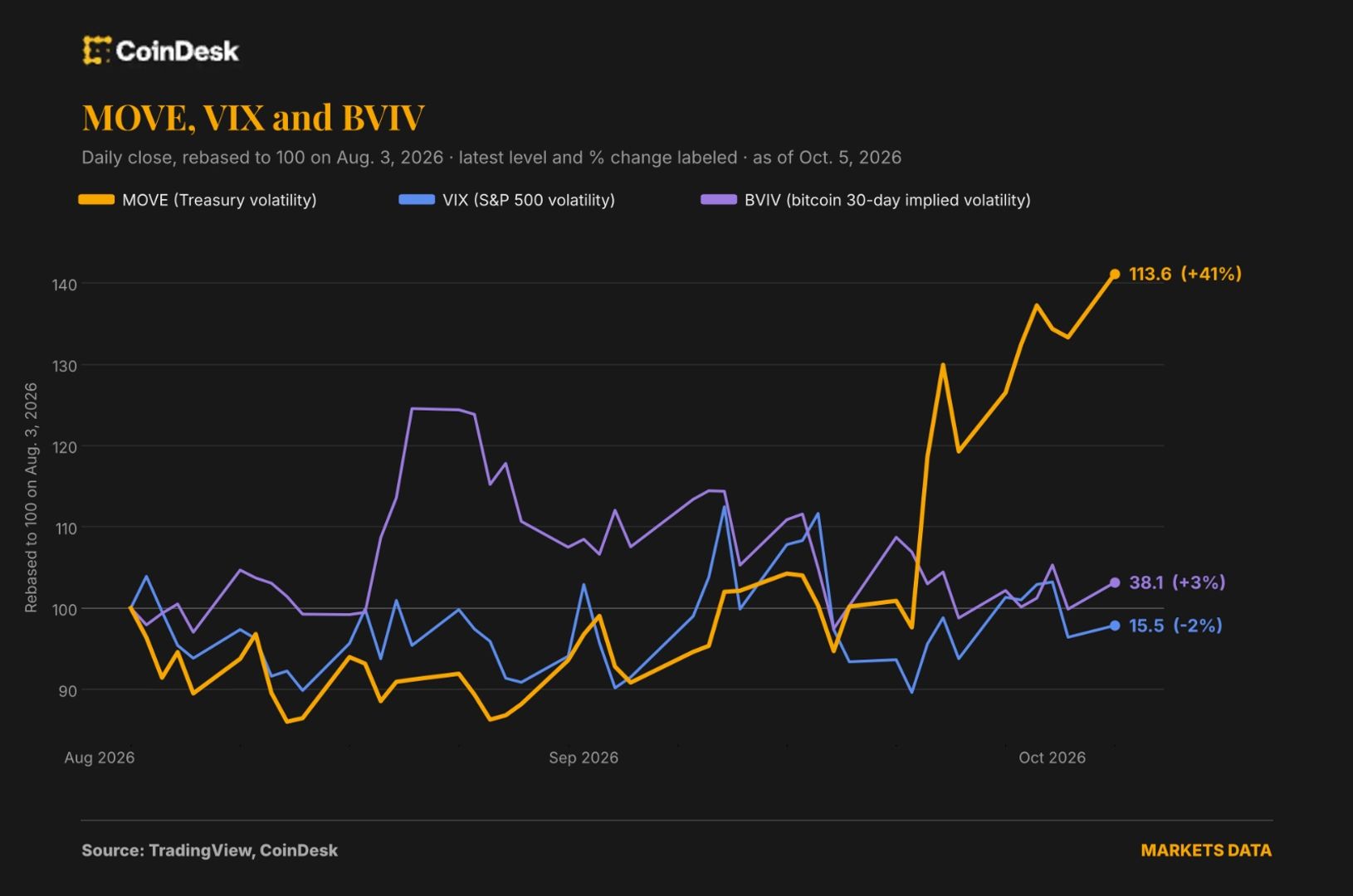
The Merrill Lynch Option Volatility Estimate (MOVE) Index, a widely recognized benchmark for gauging expected volatility in the U.S. Treasury market, has experienced a notable ascent. This rise in bond market volatility, as indicated by the MOVE Index, suggests increasing uncertainty and potential price swings within fixed-income securities. The MOVE Index, which tracks the implied volatility of U.S. Treasury options, has been sensitive to shifts in interest rate expectations and macroeconomic data releases. A higher MOVE Index typically signals that traders anticipate larger price movements in bonds, often driven by concerns over inflation, central bank policy, or geopolitical events. However, despite this uptick in bond market nervousness, the broader financial markets, including major stock indices and the cryptocurrency market, have not shown a corresponding reaction. As of October 6, 2026, key stock market indicators, such as the S&P 500 and the Nasdaq Composite, have remained relatively stable, failing to absorb the volatility signal emanating from the bond sector. Similarly, Bitcoin, the leading cryptocurrency, has also exhibited a lack of significant movement, trading within a narrow range and not reflecting the increased apprehension observed in the bond markets. This divergence in market behavior could indicate several possibilities. One explanation is that investors are compartmentalizing their risk assessments, viewing the bond market's volatility as a contained issue rather than a systemic threat to equities or digital assets. Alternatively, the current market sentiment might be driven by other factors that are currently overshadowing the implications of rising bond volatility. For instance, ongoing corporate earnings reports, specific sector performance, or anticipation of upcoming economic data releases could be holding the attention of equity and crypto traders. The lack of correlation between the MOVE Index and the performance of stocks and Bitcoin presents an interesting analytical challenge for market participants. Historically, increased volatility in the bond market has often served as a precursor to broader market adjustments, as it can signal underlying economic stress or shifts in investor risk appetite. The current disconnect, therefore, warrants close observation to determine whether it represents a temporary anomaly or a fundamental shift in how different asset classes are reacting to macroeconomic signals. Analysts are closely monitoring whether this divergence will persist or if the bond market's increased volatility will eventually translate into more pronounced movements in equities and cryptocurrencies. The Federal Reserve's monetary policy stance, inflation data, and global economic developments will likely continue to be key drivers influencing the interplay between these markets in the coming weeks and months.
Original source — read the full reporting at the publisher:
Read on CoinDeskGet the weekly AI digest
AI news + new model releases, weekly. Drafted by our agents, reviewed by humans.