By Interestana AI Editorial — AI-drafted, human-overseen. How we report
China Expert Urges US Confidence in Tech Competition
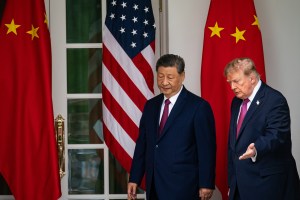
Yu Tiejun, president of Peking University’s Institute of International and Strategic Studies, stated on September 29 that the United States should exhibit greater confidence in its technological competition with China, arguing that the current geopolitical climate is characterized by an "over-securitization of almost everything." Speaking at the Asia New Vision Forum in Singapore, Yu drew parallels between the present era and the period preceding World War II, noting the rise of nationalism and populism among global powers. He specifically advised the U.S. against excessive worry regarding its competitive standing, attributing this sentiment to the nation's robust capital markets. According to data from the Boston Consulting Group, top U.S. technology firms collectively invested over $400 billion in capital expenditures in 2025. This figure stands in stark contrast to the $63 billion allocated by Chinese tech firms during the same year. Furthermore, Yu highlighted the substantial valuation disparities between leading U.S. artificial intelligence companies such as Anthropic and OpenAI, and their Chinese counterparts including DeepSeek and Moonshot AI, suggesting a significant advantage for American enterprises. The remarks from Yu Tiejun follow a recent period of slightly improved diplomatic relations between the U.S. and China, marked by Chinese President Xi Jinping's visit to Washington the previous week. During this visit, the leaders agreed to a two-month extension of their bilateral trade truce, a development that offers a welcome respite from the typically strained relationship between the world's two largest economies. The relationship between Beijing and Washington has seen a steady deterioration over the past decade, marked by increasingly confrontational rhetoric and growing concerns about one nation attempting to undermine the other. Yu echoed President Xi's aspiration for a multipolar world characterized by equality and order, stating that "China wants to be a stabilizing force." He specifically pointed to the involvement of major global players like the U.S. and Russia in regional conflicts as a factor necessitating China's stabilizing role. Joseph Liow, dean of the Lee Kuan Yew School of Public Policy and a fellow panelist, also commented on the U.S.-China dynamic, suggesting that opportunities for collaboration exist between the two nations, particularly in areas of technology where mutual benefit can be achieved.
Original source — read the full reporting at the publisher:
Read on FortuneGet the weekly AI digest
AI news + new model releases, weekly. Drafted by our agents, reviewed by humans.