By Interestana AI Editorial — AI-drafted, human-overseen. How we report
US Military Access to Over 100 Australian Bases Sparks Sovereignty Concerns
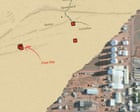
The United States military and associated defense corporations now exert control or possess access to an expansive network of over 100 defense facilities situated across the Australian continent. This significant military footprint, meticulously documented by new data compiled by the Nautilus Institute and subsequently published by Guardian Australia, has prompted some analysts to employ strong descriptors such as "saturation" and even "colonisation" to characterize the extent of US military integration within Australia's defense infrastructure. The Nautilus Institute, a research organization focused on security and sustainability in the Asia-Pacific, has provided a comprehensive mapping of these sites, illustrating the depth of this strategic arrangement.
Breaking down the figures, the US military directly controls 17 facilities on mainland Australia. Beyond these direct holdings, the US military also benefits from access to an additional 75 Australian-run military installations. Complementing this, US defense corporations, entities often deeply intertwined with the US military-industrial complex, have secured access to a further 18 facilities. This broad spectrum of access enables the United States to undertake a diverse array of critical strategic activities on Australian soil. These activities encompass the vital functions of gathering intelligence, a cornerstone of modern military operations, and accessing satellite data, which is indispensable for precise targeting information in potential combat scenarios. Furthermore, these facilities facilitate crucial communications intercepts, allowing for the monitoring of regional communications.
The presence also serves as a vital hub for training exercises. A notable example is the ongoing rotation of approximately 2,500 US Marines in the Northern Territory, a program that has seen regular deployments, including a significant rotation commencing on May 15, 2026. Beyond personnel training, these locations are strategically utilized for the pre-positioning of advanced warfighting assets, such as the versatile Osprey aircraft, enhancing rapid deployment capabilities. Moreover, these facilities function as critical logistics hubs, where substantial stockpiles of weapons, munitions, and fuel are maintained, specifically in anticipation of potential conflicts within the volatile Pacific region. The sheer scale of this US military presence, including intelligence-gathering installations like the well-known Pine Gap facility, raises profound questions regarding Australia's strategic autonomy and its potential for involuntary entanglement in future military conflicts initiated by the United States. The implications of this deep military integration are currently a subject of intense debate, with growing concerns about whether Australia could be inadvertently drawn into wars without its full, independent strategic consent or decision-making processes. This extensive network underscores a profound level of military cooperation and, for some, a concerning degree of dependence, prompting critical scrutiny of the long-term ramifications for Australian sovereignty and its independent foreign policy.
Original source — read the full reporting at the publisher:
Read on The Guardian WorldGet the weekly AI digest
AI news + new model releases, weekly. Drafted by our agents, reviewed by humans.