By Interestana AI Editorial — AI-drafted, human-overseen. How we report
US Funds $14 Billion Cable to Bypass China in Asia
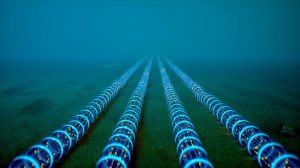
The United States is bankrolling a new trans-Pacific internet cable project valued at approximately $14 billion, designed to circumvent the South China Sea and bolster digital infrastructure in Southeast Asia, thereby limiting China's influence. On September 14, the U.S. Trade and Development Agency (USTDA) announced its commitment to fund a feasibility study for this subsea cable. The proposed route will connect Thailand, the United States, and five other Southeast Asian nations, explicitly bypassing the contested waters of the South China Sea. This strategic move by Washington aims to secure the region's digital backbone amidst growing geopolitical tensions and concerns over potential disruptions. Muhammad Faizal Bin Abdul Rahman, a research fellow at Singapore's Nanyang Technological University (NTU), highlighted the vulnerability of subsea cables, stating that "the military conflicts in the Middle East and Europe show that geopolitical crises can trigger cyber or physical disruptions to subsea cables." He further noted that "the U.S. and its Asia-Pacific allies believe that China could use similar tactics," underscoring the rationale behind the U.S. initiative to control critical internet infrastructure. This project is part of a broader U.S. strategy to influence the development of internet and AI technologies, potentially leading Southeast Asia to be divided between U.S.-led and China-led technological ecosystems. Singapore, for instance, has joined Washington's Pax Silica alliance but is also reportedly considering an invitation to the China-led World Artificial Intelligence Cooperation Organization. Other Southeast Asian countries are similarly divided, with the Philippines aligned with Pax Silica and nations like Cambodia, Indonesia, Laos, Malaysia, and Myanmar participating in China's alliance. Muhammad Faizal Bin Abdul Rahman advised that "Southeast Asian countries need to re-evaluate what neutrality means today for each of them, and how policy decisions across sectors collectively determine whether they are too dependent on any major power during times of peace or crisis." Subsea cables, which are fiber-optic lines laid on the ocean floor, are responsible for transmitting over 99% of global internet traffic. The existing Asia-America Gateway cable, established in 2009, is the primary link between the U.S. and Thailand but is known for frequent outages, particularly in its intra-Asia segments. The new cable aims to provide a more resilient and secure alternative, reducing reliance on infrastructure that could be subject to Chinese control or disruption.
Original source — read the full reporting at the publisher:
Read on FortuneGet the weekly AI digest
AI news + new model releases, weekly. Drafted by our agents, reviewed by humans.