By Interestana AI Editorial — AI-drafted, human-overseen. How we report
Xi-Trump Summit Yields Limited Substance, Shifts to 'Tactical Autopilot'
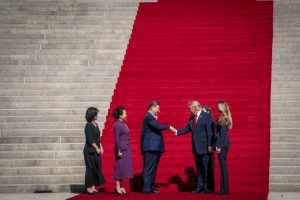
Chinese President Xi Jinping concluded a three-day state visit to the United States, meeting with U.S. President Donald Trump in Washington. The summit, which included a state dinner and a tour of the National Archives where Trump showcased historical U.S. documents, yielded a limited number of tangible outcomes. Both leaders affirmed an agreement to foster a "constructive relationship of strategic stability on the basis of respect, fairness, and reciprocity." Minor agreements were reached concerning trade and artificial intelligence (AI).
Market reactions to the summit were mixed. On Monday, Hong Kong's Hang Seng Index saw a 0.7% increase, while mainland China's CSI 300 index experienced a 2.2% decline. The limited progress was anticipated by many observers, given the significant divergence between U.S. and Chinese positions on critical issues. These include trade disputes, export controls, the geopolitical status of Taiwan, and ongoing international conflicts in Ukraine and Iran. Lindsay Newman, a visiting research fellow at King's College London, noted that "expectations were low for this meeting and those expectations were met." Eswar Prasad, a professor of trade policy at Cornell University, echoed this sentiment, stating that the summit "fizzled out on substance, confirming the vast gulf between the two countries’ objectives and the lack of enthusiasm on either side to craft a grand bargain."
Despite the lack of substantial breakthroughs, some analysts suggest that a summit with minimal concrete agreements might be beneficial under the current circumstances. With neither nation appearing willing to make significant concessions, Washington and Beijing seem to have opted for a more managed bilateral relationship. This approach is being adopted even as both countries actively pursue economic and technological decoupling from each other. Ali Wyne, a senior research advisor on U.S.-China issues for the International Crisis Group, characterized the current state of the relationship as being on "tactical autopilot," predicting it will remain so as long as Trump and Xi maintain a cordial working rapport. The focus appears to have shifted from grand strategic alignment to the day-to-day management of interactions and potential friction points.
The summit's limited substance underscores the complex and often adversarial nature of the U.S.-China relationship. While official statements emphasized cooperation and stability, the underlying tensions and competitive dynamics remain prominent. The agreements on trade and AI, though minor, represent the only concrete steps forward from the high-level discussions. The broader implications of this "tactical autopilot" approach remain to be seen, particularly in how it will influence global trade patterns, technological development, and international security in the coming months and years.
Original source — read the full reporting at the publisher:
Read on FortuneGet the weekly AI digest
AI news + new model releases, weekly. Drafted by our agents, reviewed by humans.