By Interestana AI Editorial — AI-drafted, human-overseen. How we report
US and China Discuss AI Guardrails Amidst Public Disagreement
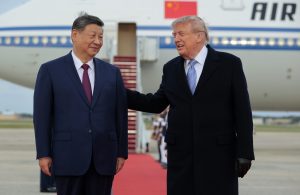
The United States and China have commenced dialogues concerning artificial intelligence guardrails, a development occurring even as public statements from U.S. leadership have expressed skepticism towards international AI regulation. This behind-the-scenes engagement signals a divergence between the public stance and private diplomacy of the U.S. administration. On a Thursday morning prior to a summit with Chinese President Xi Jinping, former President Trump publicly stated that "super intelligence"—his administration's term for AI—would be a significant discussion point, but he indicated a desire to maintain the status quo, aligning with China's position. He further asserted that the Department of Justice served as the "guardrail."
However, later that same day, standing alongside Trump at the White House, President Xi Jinping adopted a more collaborative tone, stating, "We have both the capability and responsibility to develop and manage AI for good and ensure that development of AI is always under human control." This cooperative sentiment contrasts with Trump's earlier remarks. The U.S. Treasury Secretary, Scott Bessent, met with Chinese Vice Premier He Lifeng in New York earlier in the week. Following this meeting, China's commerce ministry announced on Thursday that the two countries had held their first dialogue on AI. During his discussions, Bessent proposed a notification mechanism between the U.S. and China for AI-related incidents that pose national security risks.
This proposed mechanism echoes calls made by Anthropic CEO Dario Amodei to the UN Security Council the previous day. Amodei emphasized the global nature of AI threats, stating, "No leader, no company, and no nation can manage this alone." He urged world governments to establish shared rules for AI development and deployment. Amodei's proposals extended to initiating small, universally agreeable measures, such as a ban on using AI to create biological weapons, with the aim of gradually building more comprehensive governance systems. This initiative from Amodei represents a significant step towards international cooperation on AI safety, highlighting the urgency felt by key figures in the AI industry.
The U.S. administration's public posture has previously indicated resistance to what it terms "globalist schemes" to control AI, as stated by Trump at the UN General Assembly two days prior. Yet, the current actions by Treasury Secretary Bessent in proposing a formal channel with China, a nation often framed by Trump and American venture capitalists as a primary competitor in the AI race, reveal a more nuanced and pragmatic approach to managing AI risks. This diplomatic effort underscores the complex geopolitical landscape surrounding AI development and the growing recognition of the need for international collaboration, despite prevailing competitive tensions.
Original source — read the full reporting at the publisher:
Read on FortuneGet the weekly AI digest
AI news + new model releases, weekly. Drafted by our agents, reviewed by humans.