By Interestana AI Editorial — AI-drafted, human-overseen. How we report
Eggshell-Inspired Aluminum Protects Spacecraft
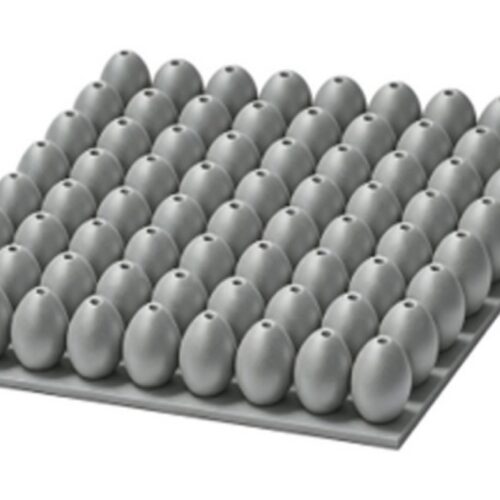
Chinese scientists have developed a novel aluminum material that mimics the protective properties of eggshells to shield next-generation spacecraft from high-velocity space debris. This innovation addresses the escalating threat posed by orbital debris, which has intensified with the proliferation of satellite constellations, telescopes, and other spacecraft. A significant incident occurred in 2007 when a piece of space debris created a bullet-like perforation in the radiator panel of the US space shuttle Endeavor, highlighting the vulnerability of spacecraft to such impacts. Although the US space shuttle program concluded in 2011, the problem of space debris has continued to grow.
The scientific fascination with eggshells stems from their remarkable mechanical characteristics. Researchers have observed that cracking an egg requires a precise application of force to the center, enabling a clean break without causing the entire shell to shatter. This phenomenon is linked to the shell's geometry and rigidity. In 2012, MIT mechanical engineer Pedro Reis, in collaboration with colleagues, published research detailing the relationship between an egg's ovoid shape and its rigidity, a critical factor in determining an object's resistance to force before fracturing. Rigidity, distinct from strength, refers to an object's resistance to deformation. For instance, two eggshells might possess the same rigidity, but one with micro-cracks would have lower strength and break more easily.
Reis's initial interest in eggshells was sparked by a common physics demonstration where individuals could stand on cartons of eggs without breaking them. The key to this feat, he discovered, was orienting the eggs with their narrowest point facing upwards, which is the most resistant part to cracking. By carefully distributing weight across the entire surface area of the egg carton, no single egg is subjected to excessive force. While it typically requires approximately 5.5 pounds of force to crack an egg, this value is highly dependent on the direction and distribution of the applied force across the shell's surface. The newly developed aluminum material aims to replicate this load-bearing and impact-dissipating capability for spacecraft applications, offering a promising solution to a persistent and growing challenge in space exploration and utilization.
Original source — read the full reporting at the publisher:
Read on Ars TechnicaGet the weekly AI digest
AI news + new model releases, weekly. Drafted by our agents, reviewed by humans.