By Interestana AI Editorial — AI-drafted, human-overseen. How we report
Roman Telescope Fuel Supply Doubles NASA's 22-Year Mission Estimate
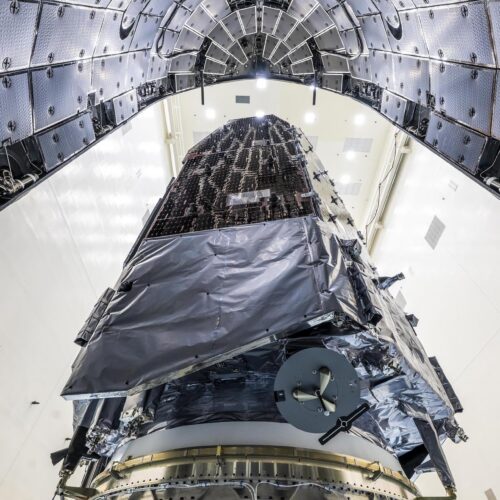
NASA's Nancy Grace Roman Space Telescope is on track for its observational mission with a fuel supply estimated to last 22 years, significantly exceeding initial projections. This extended lifespan is attributed to precise trajectory planning and successful execution of its post-launch maneuvers. The space agency confirmed this development on Monday, highlighting the efficiency of the mission's engineering and operational teams. Originally, the $4.3 billion observatory was designed with enough propellant for a minimum of five years of operation, with an additional five-year extension planned. This conservative estimate was based on anticipated fuel usage during launch and orbital adjustments. However, the actual performance has been remarkably efficient. The observatory's designers had factored in a degree of uncertainty regarding the launch and the critical first course correction. The successful launch by SpaceX and the flawless execution of the initial orbital maneuvers have resulted in a substantial fuel reserve. Jamie Dunn, center director at NASA's Goddard Space Flight Center, stated in a press release that "As a result of exquisite planning by our orbital dynamics team, brilliant execution by the operations team, and a precise launch from SpaceX, Roman has fuel for at least 22 years of potential science operations." This surplus fuel capacity means the Roman telescope can conduct scientific observations for more than double its originally planned operational period. The Nancy Grace Roman Space Telescope, formerly known as the Wide-Field Infrared Survey Telescope (WFIRST), is a planned space telescope developed by NASA. Its primary mission is to investigate dark energy, dark matter, and exoplanets. The telescope will feature a large, 2.4-meter primary mirror, similar in size to the Hubble Space Telescope's mirror, but with a field of view that is 100 times larger. This wide field of view will enable it to survey vast areas of the sky much more efficiently than previous infrared telescopes. The mission's scientific goals include measuring the expansion rate of the universe with unprecedented precision, mapping the distribution of dark matter, and conducting a large-scale survey to detect and characterize thousands of exoplanets using microlensing techniques. The extended mission duration provided by the ample fuel supply will allow scientists to gather more extensive data, refine their analyses, and potentially uncover new astronomical phenomena. The fuel, primarily hydrazine, is stored in four tanks and is crucial for maintaining the telescope's orbit and orientation for its sensitive instruments. The extended operational life of the Roman telescope will be a significant boon for astronomical research, enabling prolonged studies of cosmic evolution and the search for habitable worlds. The precise trajectory and efficient fuel management are testaments to the advanced capabilities of NASA's mission planning and execution. The observatory is slated to launch from Cape Canaveral Space Force Station in Florida. The mission's cost of $4.3 billion encompasses development, launch, and initial operations. The extended mission capability means that the return on this investment will be significantly amplified, providing a wealth of scientific data over a much longer period than initially anticipated.
Original source — read the full reporting at the publisher:
Read on Ars TechnicaGet the weekly AI digest
AI news + new model releases, weekly. Drafted by our agents, reviewed by humans.