By Interestana AI Editorial — AI-drafted, human-overseen. How we report
Andrew Carnegie's Wealth Philosophy Echoes Today's Inequality
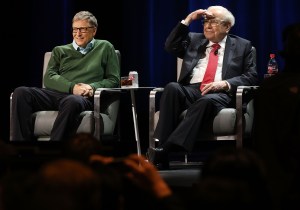
Andrew Carnegie's famous assertion, "the man who dies rich dies disgraced," articulated a philosophy of active, lifetime wealth redistribution, a concept gaining renewed relevance as the United States experiences wealth inequality levels approaching those of the early 20th century. Carnegie, in his 1889 "Gospel of Wealth," argued that accumulating surplus fortune past one's death constituted a moral failing. He viewed the wealthy as trustees obligated to distribute their fortunes during their own lifetimes, allowing them to directly observe and influence the impact of their giving, rather than entrusting it to heirs or bureaucratic entities like foundations or family offices.
The economic conditions that spurred Carnegie's argument are now comparable, and in some aspects, have surpassed those of his era. Data indicates that the top 0.1% of Americans currently hold over 14% of national wealth, a record high since the Federal Reserve began tracking this metric in 1989. Economists Emmanuel Saez and Gabriel Zucman, in their 2014 research that reconstructed U.S. wealth concentration data back to 1913, found that the top 0.1% owned approximately 22% of national wealth. This level of concentration is nearing the peaks observed in 1916 and 1929.
Nobel laureate Paul Krugman has extensively studied these comparisons, characterizing the current period not merely as a "Gilded Age" but as a "hyper-gilded age," drawing direct parallels to Carnegie's time. The core difference highlighted is Carnegie's rejection of foundations as a substitute for personal, lifetime giving. He presented only three avenues for surplus wealth: bequeathing it to heirs, willing it for future public use, or spending it during one's own life. This emphasis on immediate, self-directed philanthropy stands in contrast to contemporary approaches, where figures like Peter Thiel are noted for campaigns against giving, Warren Buffett's fortune continues to grow exponentially, and Bill Gates faces scrutiny over the efficacy of his foundation's model.
Original source — read the full reporting at the publisher:
Read on FortuneGet the weekly AI digest
AI news + new model releases, weekly. Drafted by our agents, reviewed by humans.