By Interestana AI Editorial — AI-drafted, human-overseen. How we report
India's Green Growth Gamble Needs State Demand
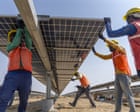
India is embarking on an unprecedented economic and environmental undertaking, aiming to expand its Gross Domestic Product (GDP) nearly eightfold within a generation while simultaneously transitioning its energy and industrial systems to achieve net-zero emissions within two generations. This ambitious goal, as outlined by Niti Aayog, the government of India's policy thinktank, has no historical precedent among major economies. The challenge lies in industrializing and decarbonizing concurrently, a path distinct from that of nations like China, which industrialized at scale without prioritizing sustainability, or South Korea, Japan, and European countries that industrialized before focusing on decarbonization. These developed nations achieved wealth by first building infrastructure and satisfying basic societal demands, leading to high per-capita energy consumption. India, as the world's most populous country, must now build this foundational infrastructure and meet the rising energy needs of its population while actively reducing emissions. The Niti Aayog report, titled "Scenarios Towards Viksit Bharat and Net Zero: An Overview Vol 1," details the complexities of this dual objective. Achieving net-zero emissions by 2070 requires an estimated $2.2 trillion in investment, according to earlier claims by Niti Aayog. This massive financial requirement highlights the scale of the challenge. The report also projects that India's coal use will continue to rise until 2047, underscoring the gradual nature of the energy transition. The editorial in The Guardian suggests that this "green growth gamble" will necessitate more than just private finance, implying a critical role for state-generated demand to drive industrialization and the necessary decarbonization efforts. Without sufficient state intervention and demand creation, India risks falling into an overcapacity trap, similar to what has been observed in China's industrial development. The country's unique position, needing to develop rapidly while mitigating climate impact, distinguishes its approach from historical models of economic growth. The editorial emphasizes that the success of India's strategy hinges on its ability to orchestrate a complex interplay between economic expansion, energy system transformation, and climate action, a balancing act that requires careful planning and significant public sector involvement to complement private investment.
Original source — read the full reporting at the publisher:
Read on The Guardian EnvironmentGet the weekly AI digest
AI news + new model releases, weekly. Drafted by our agents, reviewed by humans.