By Interestana AI Editorial — AI-drafted, human-overseen. How we report
The Black Garden Review: War-Torn Childhood in Nagorno-Karabakh
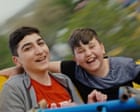
Alexis Pazoumian's documentary, "The Black Garden," offers a haunting examination of childhood amidst the protracted conflict in Nagorno-Karabakh. The film chronicles the lives of two preteen boys, Samvel and Avo, whose formative years are indelibly marked by the brutal realities of war. The documentary was filmed over three years, culminating in September 2023 with the surrender of Nagorno-Karabakh’s separatist government. This event followed decades of territorial disputes and military campaigns by the Azerbaijani army against the region's largely Armenian population, which began after the collapse of the Soviet Union in 1991. Pazoumian's work captures the pervasive sense of collective turmoil that has defined generations of Armenians, highlighting an unwavering community pride that persists through continuous bloodshed and displacement.
The film opens with a stark depiction of a bombed-out school in the village of Talish, where the innocence of childhood starkly contrasts with the trauma of wartime. Samvel and Avo are shown navigating the ruins, searching for remnants of their former lives, such as scattered notebooks from their classmates. The pervasive threat of conflict is integrated into their daily routines. At school, their education includes learning to assemble firearms, and family gatherings feature songs celebrating heroic valor. The narrative underscores the inevitability that the children of this region, both boys and girls, are destined to become soldiers. This foregone conclusion is a direct consequence of the ongoing militarization and the normalization of conflict as a part of their upbringing.
"The Black Garden" meticulously documents the psychological and social impact of sustained warfare on young minds. The boys' play often mimics military scenarios, reflecting the environment they inhabit. Their understanding of the world is shaped by the constant presence of danger and the narratives of resistance and sacrifice. The documentary does not shy away from depicting the emotional toll, showing moments of fear, resilience, and a premature understanding of loss. Pazoumian's approach is observational, allowing the viewer to witness the unfiltered experiences of Samvel and Avo, thereby fostering a deep empathy for their situation. The film serves as a powerful testament to the enduring human spirit in the face of overwhelming adversity, while simultaneously serving as a stark reminder of the devastating consequences of unresolved geopolitical conflicts on civilian populations, particularly the youngest.
The documentary's focus on Samvel and Avo provides a micro-level perspective on the macro-level political and military events that have shaped Nagorno-Karabakh. By centering the narrative on these two boys, Pazoumian humanizes the statistics and headlines associated with the conflict, illustrating how war directly impacts individual lives and futures. The film's three-year span allows for the observation of subtle yet significant changes in the boys' demeanor and understanding as the conflict escalates and eventually leads to the political shift in September 2023. This extended timeframe is crucial for capturing the nuanced development of their resilience and their adaptation to a life defined by war. "The Black Garden" is thus not just a film about a specific conflict, but a broader commentary on the universal experience of growing up in environments where peace is a distant memory.
Original source — read the full reporting at the publisher:
Read on The Guardian CultureGet the weekly AI digest
AI news + new model releases, weekly. Drafted by our agents, reviewed by humans.